

Why Choose Private Jet Charter Over Commercial Flights — Key Benefits and Practical Insights
Private jet charter is a tailored air‑travel solution that delivers on-demand, point‑to‑point flights using business aviation resources instead of scheduled airlines. By removing many fixed steps of commercial travel—long check‑in lines, set departure times and large connection buffers—charter flights give you a faster, more flexible and highly personalised journey. That saves executive hours and reduces travel friction. This guide breaks down how charter converts into measurable time savings, greater flexibility, stronger privacy and safety controls, superior comfort, better airport access and clearer productivity gains. You’ll get the practical mechanisms behind each claim, time comparisons, real use cases for groups and urgent cargo, and examples of how operators put these advantages into practice. Sections follow the common decision factors: time savings, customisation, privacy and security, comfort, airport access and productivity—with data, lists and comparisons to help you judge when charter is the right choice.
How Does Private Jet Charter Save You Time Compared to Commercial Flights?

Charter cuts door‑to‑door travel time by simplifying ground procedures, enabling direct routing and speeding boarding and turnarounds. The principle is simple: fewer fixed processes and access to FBOs or VIP terminals reduce waiting and transfer time, while on‑demand departures remove the padding that inflates airline schedules. The net result is consistent time saved across round trips and multi‑stop itineraries—especially valuable for executives, time‑sensitive freight and medical transfers. Below we unpack the primary sources of savings, estimate typical minutes reclaimed per flight, and give an operational example showing route‑dependent variation.
Private jet travel delivers time savings through several concentrated mechanisms:
- VIP terminal and FBO processing: Check‑in and security happen in private spaces, often allowing passengers to arrive as little as 15 minutes before departure.
- Direct point‑to‑point routing: Flights can use airports closer to your origin or destination and avoid hub connections, cutting transfer time.
- Flexible departure windows and quicker turnaround: Crews and aircraft are scheduled to minimise ground time and speed boarding and disembarkation.
- Expedited customs and handling: Where available, fast customs clearance and discrete handling eliminate long immigration queues.
These elements combine to produce meaningful net savings that vary by route and use case; the table below quantifies common time‑savers for typical passengers.
Different procedural and routing advantages produce measurable time savings for charter passengers.
Seen together, these time‑savers add up to substantial door‑to‑door improvements and help explain the net advantage charter passengers typically experience.
What Are the Main Sources of Time Savings in Private Jet Travel?
The biggest savings come from operational and logistical differences: private terminals remove congested airport flows, direct routing cuts out hub connections, and bespoke scheduling shortens pre‑ and post‑flight procedures. FBOs let passengers complete formalities away from main terminals, reducing wait times and the need to arrive hours early. Point‑to‑point routing avoids hub‑and‑spoke detours and the ground transfers that can double door‑to‑door time on complex trips. Operators also optimise crew rotas and turnarounds to keep ground time minimal, which means travellers can start and finish their day much closer to scheduled meetings—particularly valuable for tightly packed business itineraries and urgent freight missions.
Those operational advantages lead to a common question: how large are the typical time savings on real journeys?
How Much Time Can You Expect to Save on Average Per Flight?
Industry reports and operator data commonly cite an average saving of around 127 minutes per flight when comparing private charter door‑to‑door times with commercial options, though this varies by route and airport choice. Short hops often save 45–90 minutes by avoiding long check‑in and security waits; medium‑ and long‑haul trips can save two hours or more when they remove connections and lengthy transfers. Influencing factors include how close the departure and arrival airports are to your origin/destination, FBO availability and whether customs processing is required. For example, using a secondary airport 20 minutes closer by road plus FBO processing can cut two hours from a trip that would otherwise require a one‑hour drive to a major hub plus a two‑hour pre‑flight arrival window.
Knowing these averages and their drivers explains how operators turn theoretical savings into customer‑facing procedures and services.
With time advantages explained, the next section shows how charter operators make schedule flexibility and bespoke itineraries practical for real travellers.
What Flexibility and Customisation Does Private Jet Charter Offer Over Commercial Flights?
Private jet charter gives you on‑demand scheduling, route flexibility and cabin services tailored to your needs—capabilities standard airlines can’t match because they run fixed schedules and standard routings. The source of this flexibility is operational freedom: charter operators set departure times, add unscheduled stops, alter routing mid‑journey when needed, and adapt cabin layouts and services to passenger requirements. That freedom is valuable for multi‑stop business trips, group travel, pet transport and urgent missions where control over timing and service affects the outcome. The sections below explain how last‑minute changes work and the practical advantages of custom itineraries.
Operators support last‑minute changes with flexible booking systems, on‑call crew rosters and pre‑cleared procedures that reduce the friction and cost of re‑routing. Rebooking typically depends on aircraft availability and regulatory limits like slots and airspace, but experienced operators can move times or destinations with minimal notice. Refuelling stops and routing changes are coordinated by flight operations teams, with costs and notice varying by aircraft type; reputable providers are transparent about those terms. For example, a corporate group booking might add a same‑day stop with little disruption because the charter can adjust the flight plan and ground handling quickly.
Custom itineraries and on‑demand stops deliver real efficiencies for complex agendas. Multi‑city routing lets you fit more meetings into a single day and avoid extra nights away, while bespoke cabin setups—including pet‑friendly arrangements and tailored catering—improve comfort and meet specific needs. That control directly supports productivity by compressing travel time and letting travellers run their day, not the airline’s schedule.
For clients who value responsiveness and tailored service, some operators package these capabilities explicitly. For example, Charter‑A Ltd sums its promise as “Your aircraft, your time” and backs it with 24/7 support—an example of how flexibility becomes a practical offering without distracting from the operational focus.
Why Is Privacy and Security Superior on Private Jet Charters Compared to Commercial Flights?
Privacy and security combine exclusive cabin access with tightly controlled operational procedures, creating an environment that’s easier to keep discrete than a crowded commercial flight. The core advantage is reduced exposure: fewer people, private terminals and direct crew‑passenger relationships mean confidential meetings can happen on board with minimal public visibility. Private operations also often include stricter access control, vetting of crew and handlers, and an operational culture focused on single‑mission service rather than mass transit. The subsections below spell out the confidentiality measures and safety protocols that support these claims.
How Does Private Jet Travel Ensure Confidentiality and Discreet Boarding?
Private boarding through FBOs and VIP terminals minimises public exposure and lets sensitive passengers complete formalities in private. Discreet boarding reduces interactions with airport crowds and removes gate‑area visibility, while dedicated ground staff and controlled access points limit who can approach the aircraft. These procedures are standard where confidentiality matters—high‑profile executives, medical transfers or sensitive cargo—and create an environment where conversations and documents stay private.
What Safety Standards and Protocols Make Private Jets Safer?
Private jets operate under robust regulatory frameworks with scheduled inspections, compliance with airworthiness directives and safety management systems that emphasise preventive maintenance. Pilot training and currency requirements for business aviation include recurrent checks and scenario‑based training suited to on‑demand operations, contributing to experienced crew performance. While statistics vary by dataset, well‑regulated segments of business aviation often show low incident rates per 100,000 flight hours, reflecting a culture of intensive maintenance and oversight. Together, these practices provide operationally strong safety controls that complement charter’s privacy benefits.
How Does Comfort and Luxury in Private Jet Travel Outperform Commercial Flight Experiences?
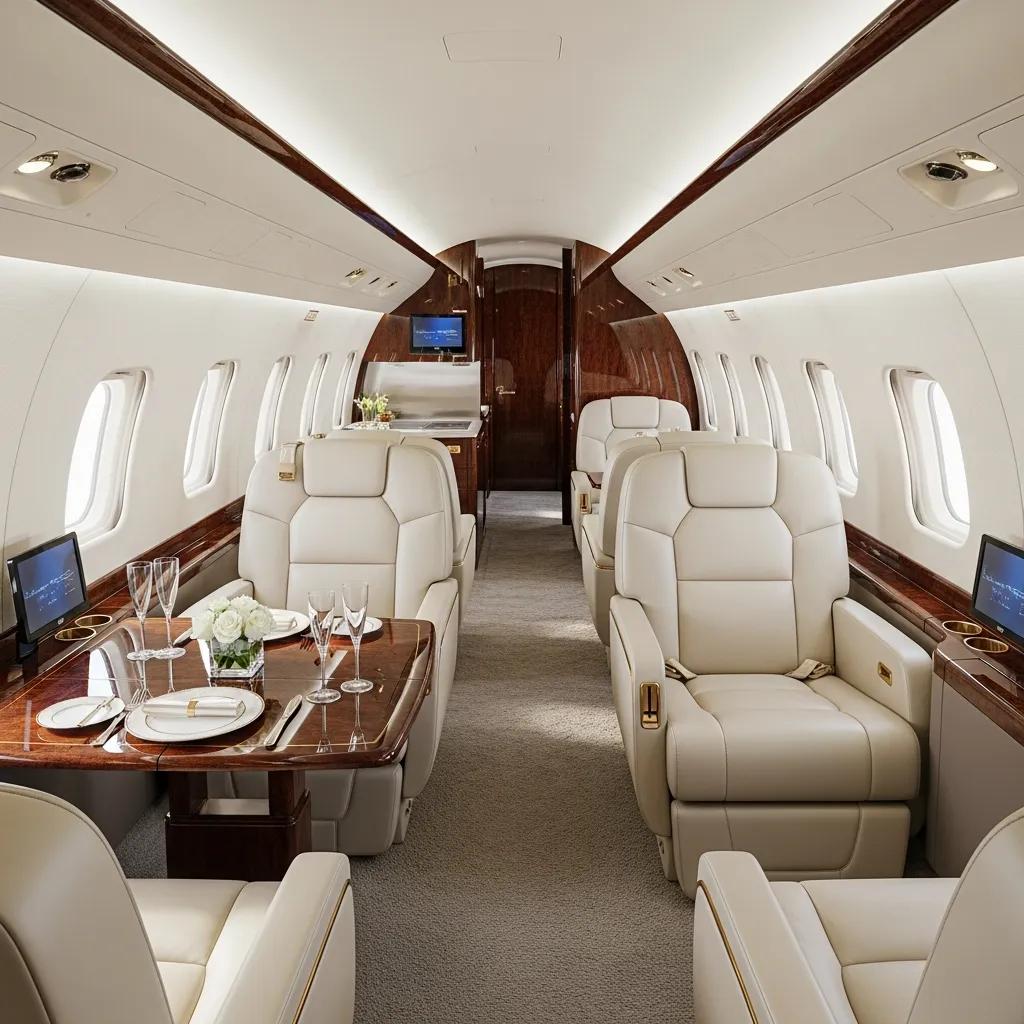
Comfort and luxury on private jets come from roomy cabins, configurable seating, personalised catering and attentive service—an environment tuned to passenger needs rather than a one‑size‑fits‑all seat allocation. The mechanism is individualisation: operators can set cabins for sleep, meetings or relaxation, provide high‑quality bespoke menus and deliver a concierge‑style service. The outcome is reduced travel fatigue, better rest and a higher chance of productive time on board. The sections below list common amenities and show how personalised service enhances the journey.
What Amenities and Cabin Features Enhance Passenger Comfort?
Cabin amenities commonly include spacious seats with full recline or lie‑flat options, private lavatories, climate control, premium entertainment and high‑speed connectivity for work or leisure. Aircraft classes differ: light jets are ideal for short regional hops, while midsize and heavy jets offer sleeping arrangements and larger cabins for longer flights. Combined with in‑flight catering, dedicated crew and cabin climate control, these features deliver an experience closer to a private lounge in the sky and help passengers arrive fresher and ready to perform.
How Does Personalised Service Elevate the Luxury Experience?
Personalised service shows up as tailored menus, pre‑flight concierge coordination, focused cabin crew attention and bespoke ground transfers that link the whole journey. Service‑trained crews offer hospitality‑led care, while ground teams handle transfers and special‑handling needs—pet travel, family seating or equipment—seamlessly. Those services bring practical benefits: passengers arrive rested, preserve privacy and save mental energy for work or leisure. Together with the cabin features described above, personalised service turns luxury into measurable gains for productivity and wellbeing.
What Are the Advantages of Private Jet Access to Airports Compared to Commercial Flights?
Private jets can operate from FBOs and smaller general aviation airports often closer to final destinations than major airline hubs, giving a logistics edge in door‑to‑door time. The enabling factors are aircraft performance and operational approvals: many business jets need shorter runways and many FBOs exist at secondary fields, cutting ground transfers and exposure to busy terminal processes. The result is more convenient pick‑ups and drop‑offs, shorter surface time and access to destinations airlines don’t serve. The next subsections explain how smaller airports are used and quantify the impact on travel efficiency.
FBOs and general aviation aerodromes offer private handling, parking and ground services that streamline departures and arrivals. Aircraft performance—take‑off and landing requirements for turboprops and light to midsize jets—permits use of shorter runways and smaller fields, opening airports often closer to business districts or remote sites. Passengers benefit from shorter commutes and simpler logistics, enabling tighter itineraries.
The expanded airport choice translates into measurable door‑to‑door savings and higher meeting density on multi‑stop trips. For many business travellers, using a closer airport can shave an hour or more off ground transfer time per end of journey, which compounds into meaningful productivity gains. The table below contrasts typical attributes of private jets and scheduled airlines to illustrate the differences.
This side‑by‑side view shows why private aviation often reduces surface transfers, avoids hub congestion and gives you more scheduling control than scheduled airlines.
How Does Private Jet Charter Boost Productivity for Business and Corporate Travelers?
Private jet charter increases productivity by turning travel time into usable work or restorative time with dedicated in‑flight workspaces, reliable connectivity and schedules that let you attend multiple meetings in one day. The mechanism combines environment control and schedule compression: quiet cabins, private meeting space, power and secure Wi‑Fi enable focused work, while flexible routing cuts downtime between engagements. Together, these features increase meeting density, reduce travel fatigue and preserve executive decision‑making capacity. Below we list in‑flight features and explain how flexible routing leads to better business outcomes.
In‑flight productivity features include high‑speed, secure Wi‑Fi, configurable workspaces with tables and power outlets, and private cabins suited to confidential meetings. These let teams continue collaborative work or hold briefings en route, maintaining momentum and reducing the need for daytime gaps. Secure links and a private environment also enable sensitive discussions inappropriate for public cabins. The table below maps specific on‑board features to direct productivity outcomes for corporate travellers.
What In‑Flight Features Support Work and Multitasking?
High‑speed, secure Wi‑Fi and dedicated workspaces are the foundation of in‑flight productivity, enabling virtual meetings, document editing and secure communications while airborne. Reliable power and ergonomic seating support longer working sessions without the discomfort of standard airline seats, and the private cabin permits confidential discussions or team briefings. A work‑conducive environment reduces the opportunity cost of travel time and often replaces the need for on‑ground meeting time. Together, these features convert travel hours into productive or restorative periods that support corporate goals.
How Do Flexible Routes and Scheduling Improve Business Travel Outcomes?
Flexible routing and bespoke schedules let travellers stitch multiple meetings across cities into a single day, dramatically increasing meeting density versus airline timetables. By cutting overnight stays and enabling early departures or late returns, charters help executives compress agendas and speed decision cycles. For urgent needs, the ability to reposition aircraft quickly supports immediate attendance at critical meetings or inspections. A short example: a regional road‑plus‑charter plan that replaces an overnight airline itinerary with a same‑day multi‑meeting trip shows how flexible scheduling can shorten project timelines and reduce overall costs when time‑value makes speed the priority.
With these productivity gains in mind, weigh charter benefits against commercial options when planning travel. The comparisons and use‑cases throughout this guide help planners decide when charter delivers clear value.
[For travellers wanting operational examples of time‑saving services, some operators convert the advantages described here into specific processes. For example, Charter‑A Ltd highlights simplicity and time savings with 24/7 support, VIP terminal processing that enables 15‑minute arrival protocols, and procedures for rapid customs clearance—demonstrating one way operators implement these mechanisms.]
Requesting a bespoke charter that matches your itinerary and productivity goals is the natural next step for decision‑makers.
For booking and operational enquiries, Charter‑A Ltd points to a wide global fleet and round‑the‑clock booking support to match mission needs, providing a clear path to turn the advantages above into action.
Frequently Asked Questions
What types of aircraft are available for private jet charter?
Charters offer a broad range of aircraft: light jets, midsize jets, heavy jets and larger airliners for group travel. Light jets suit short regional hops; midsize and heavy jets provide more space and amenities for longer flights. Each class has distinct features—seating layout, in‑flight services and range—so you can choose the aircraft that best fits your route, passenger count and comfort needs.
How does the cost of private jet charter compare to commercial flights?
Private jet charter is generally more expensive than a commercial ticket, but cost comparisons should include the value of time saved, convenience and personalised service. When you factor in time in queues, layovers and delay risk, a charter can be more cost‑effective for business travellers. Access to smaller airports and tailored itineraries can also reduce ground costs and loss of productive time—often the decisive factors for corporate bookings.
Can private jets accommodate special requests, such as dietary restrictions or pet travel?
Yes—charters are highly adaptable and regularly handle special requests like dietary requirements and pet travel. Operators provide bespoke catering to meet specific needs, and many aircraft are configured to travel safely and comfortably with pets. This personalised approach makes travel smoother for all passengers.
What are the environmental impacts of private jet travel compared to commercial flights?
Per passenger, private jets typically have a higher carbon footprint than commercial flights because fewer people travel per flight. That said, many operators are adopting more sustainable practices—fuel‑efficient aircraft, carbon offset programmes and operational choices that reduce unnecessary ground transfers. Flying direct to closer airports can also cut surface emissions. The industry is increasingly focused on balancing premium service with environmental responsibility.
How do I choose the right private jet charter service?
Choose a charter service by checking safety records, certifications, fleet variety and customer feedback. Look for operators with transparent operational histories and strong safety credentials. Reviews provide insight on service quality and reliability, while the available aircraft must suit your itinerary and passenger count. Finally, responsive customer support is crucial—good operators keep communication clear before, during and after your trip.
What should I expect during the booking process for a private jet charter?
Booking usually starts with a consultation about your travel needs—destination, dates and passenger count. The operator then proposes aircraft options and pricing. Once you select an aircraft you receive a formal quote and contract. The process is typically straightforward, and many operators offer online booking and 24/7 support. Expect clear guidance on payment, itinerary details and any special requests you have.
Conclusion
Private jet charter delivers clear advantages over commercial flights: significant time savings, greater flexibility, enhanced privacy and elevated comfort. Those benefits translate into a more productive and less stressful travel experience, letting you focus on the task at hand instead of logistics. If you’re ready to elevate your travel, exploring bespoke charter options will show how tailored service unlocks the full potential of air travel. Discover how our personalised solutions can meet your needs today.
