

How to Save Time with Private Jet Charter for Faster, More Efficient Travel
Private jet charter compresses door-to-door travel time by replacing long terminal procedures, fixed airline schedules and indirect routings with tailored departures, direct routing and private terminal access. Readers will learn stage-by-stage where minutes and hours are reclaimed, how that time converts into increased productivity for executives, and practical planning approaches for same-day returns and multi-stop itineraries. This guide explains the core mechanisms—FBO/private terminal handling, point-to-point routing using smaller airports, faster boarding and baggage turnaround—and shows how airborne office capabilities and reduced fatigue amplify business effectiveness. We map exact time-saving stages, present example calculations to translate per-flight minutes into annual reclaimed hours, and offer operational tips on scheduling, multi-leg planning and connectivity setups for uninterrupted work in flight. Throughout the article we use semantic clarity—defining entities, mechanisms and benefits—and provide tables and lists that make it easy to compare commercial and private options. The coverage includes practical case comparisons, productivity implications and the controlled ways operators can deliver faster, more efficient travel for business and leisure.
What Are the Key Time-Saving Benefits of Private Jet Charter?
Private jet charter saves time primarily through expedited ground handling, direct point-to-point routing, use of closer smaller airports, and simplified boarding and baggage procedures that collectively shorten door-to-door travel. These mechanisms reduce waiting, eliminate many security queues and remove the need for long connection windows, which benefits executives and tightly scheduled travellers. Understanding each stage clarifies how incremental minutes become meaningful hours and enables planning same-day returns or rapid multi-stop itineraries. Below, we break down the principal benefits and show the stage-level impacts so you can prioritise where private charter yields the most value.
Private charter delivers the following core benefits:
- Faster check-in and security via private terminals and FBO processing that bypass main terminal queues.
- Direct routing and the ability to fly into smaller airports closer to final destinations cut ground transfer time.
- Rapid boarding, disembarkation and luggage handling that reduce pre- and post-flight waiting.
- Flexible scheduling and on-demand departures that eliminate long connection buffers.
These benefits are complementary: expedited ground processes align with direct routing to maximize door-to-door speed and reduce overall travel stress.
How Does Private Jet Travel Bypass Airport Delays and Security Lines?
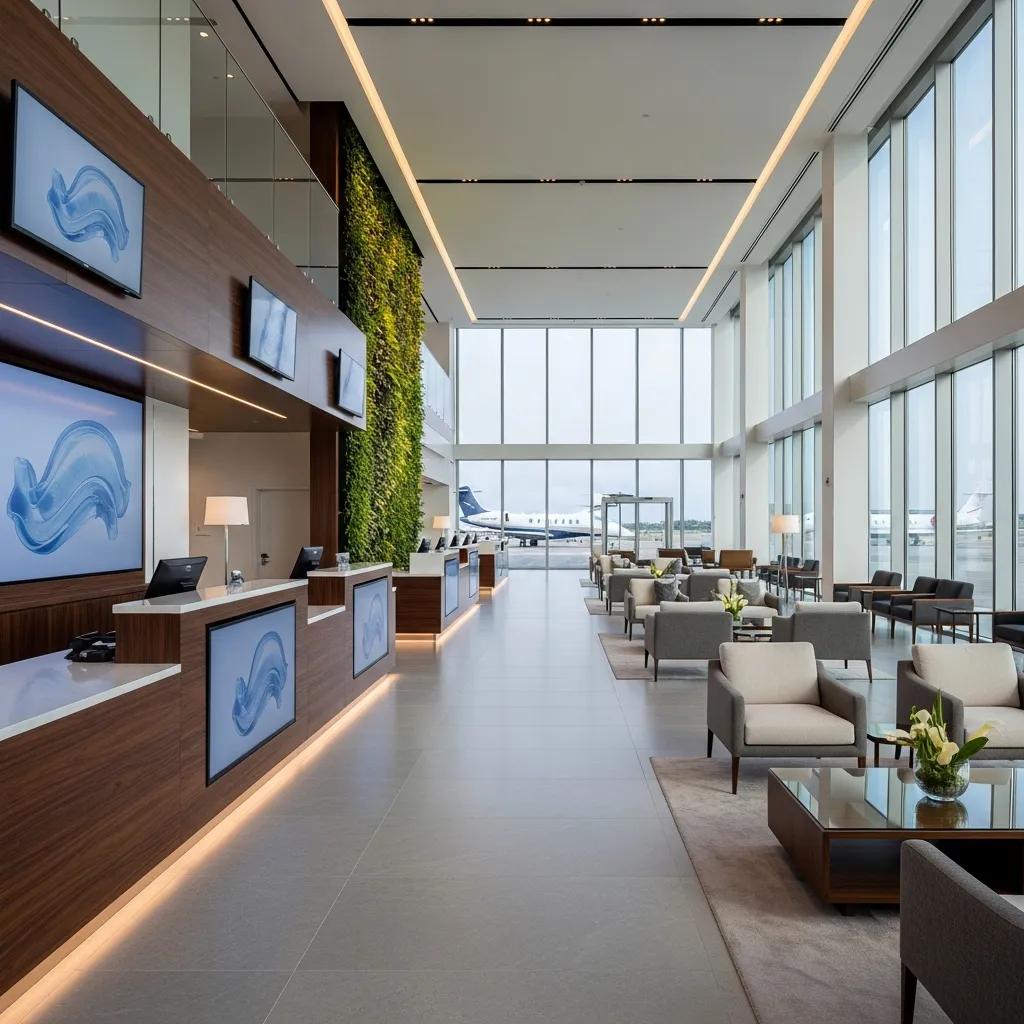
Private jet travel bypasses the significant sources of terminal delay by routing passengers through Fixed Base Operators (FBOs) or private terminals where check-in, ID checks and security processing are streamlined and often completed in minutes rather than an hour. This operational difference reduces exposure to airline delays, lengthy security queues and gate changes because passengers avoid congested public terminals and go through dedicated, staff-assisted screening. Typical savings at this stage can range from 30 to 90 minutes, depending on airport congestion, which directly shortens the time before boarding and increases usable work time. Understanding the FBO workflow clarifies why private terminal access is one of the single most significant contributors to door-to-door time savings.
These FBO advantages also set up faster post-flight processes, which means less time spent recovering luggage and moving to ground transport, and that smoother exit sequence introduces the next important time saver: access to closer, smaller airports.
How Do Direct Flights and Smaller Airports Reduce Overall Travel Time?
Direct flights and the ability to land at smaller regional airports reduce total journey time by removing layovers and cutting long ground transfers inherent to major hubs. Point-to-point routing removes connection wait windows and reduces cumulative delays that multiply with each connecting leg, while landing closer to an appointment can shave 20–90 minutes off ground travel. Smaller airports typically have faster arrival procedures and shorter taxi times, which is compounded by direct routings to preserve productive hours for passengers. Choosing the right airport and routing is therefore a core planning decision that significantly affects whether a trip is feasible as a same-day round trip or requires overnight accommodation.
Strategic route planning combines aircraft range, airport proximity and meeting schedules to create itineraries that minimise non-productive travel time and maximise time at the destination.
The table above shows typical stage-by-stage ranges where private charter reduces minutes per stage; aggregated stage savings enable clearer decision-making about chartering versus using scheduled airlines. These stage savings make it easier to calculate door-to-door time and to justify private charter for time-critical travel.
This stage-level breakdown leads directly into how time saved translates to measurable productivity gains in the aircraft itself, which we explore next.
How Can Private Jet Charter Maximise Business Jet Productivity?
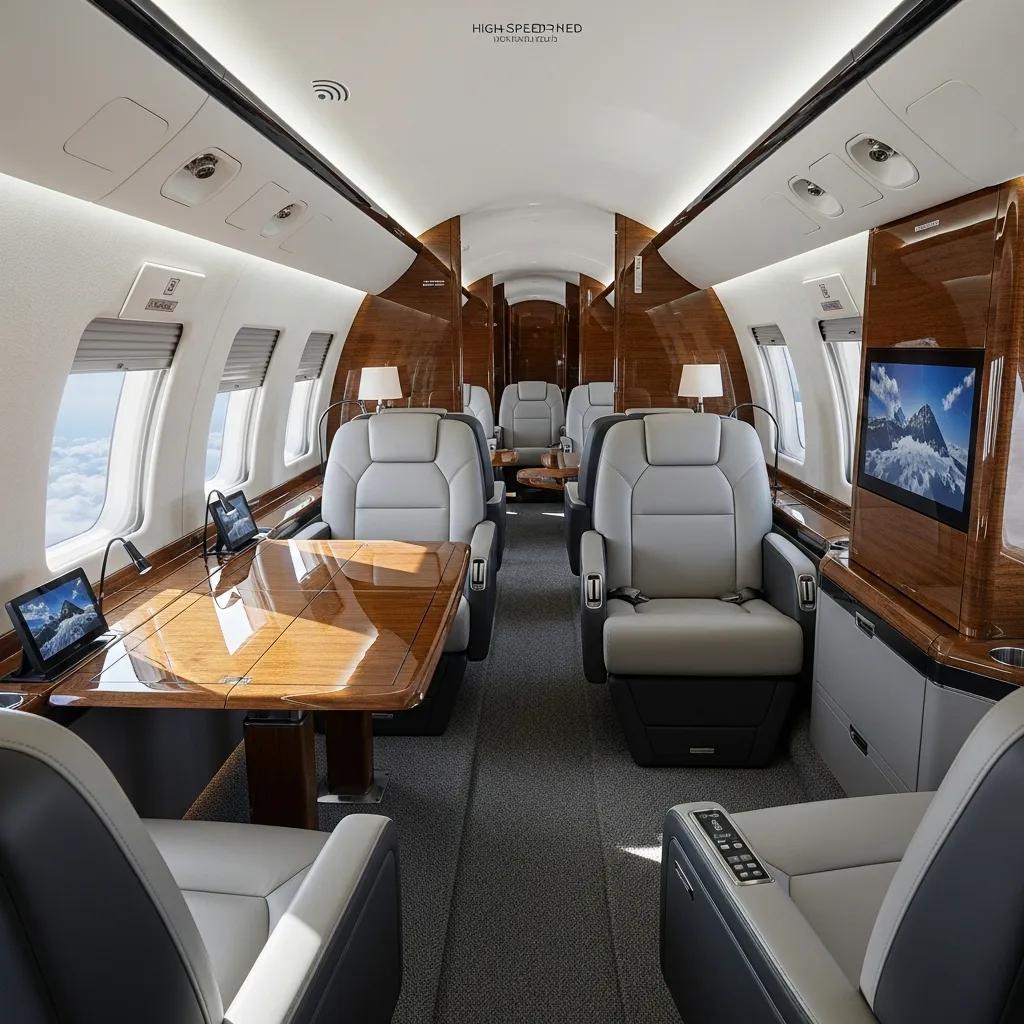
Private jets act as airborne offices by combining privacy, flexible cabin layouts and often robust connectivity so passengers can continue high-value work en route. An airborne office minimises interruptions common on commercial flights, allowing confidential conversations, document review and video conferences in a controlled environment with fewer distractions. Improved rest, more predictable scheduling and the ability to plan meetings that start immediately on arrival create a multiplier effect: time saved on the ground converts into time used productively in flight or at the destination. Below, we detail in-flight features and how each contributes directly to executive performance.
Key airborne office features include:
- Connectivity: In-flight Wi-Fi and secure comms support real-time collaboration and video calls.
- Privacy and layout: Cabin configurations enable private discussions and small group meetings.
- Ergonomics and comfort: Seating, table arrangements and lighting support sustained focused work.
These features not only enable meetings in flight but also reduce travel fatigue and maintain cognitive clarity for decision-making on arrival.
This feature→capability→benefit table demonstrates how specific cabin attributes translate into measurable productivity, reinforcing why private charter is valuable for executives who need to protect and use travel time effectively.
What Makes the Private Jet an Effective Airborne Office?
A private jet becomes an effective airborne office when it provides reliable connectivity, privacy for sensitive discussions and a cabin layout that supports collaboration and focused work. Secure Wi-Fi and the ability to use corporate VPNs create a virtual office in the sky, enabling simultaneous work across teams and uninterrupted access to cloud resources. Cabin privacy reduces the risk of information leakage. It enables candid briefings that would be inappropriate in a public cabin, while ergonomic seating and tables permit document review, laptop work and small meetings. Together, these elements turn travel time into work time rather than downtime, and they directly increase the return on time invested in travel.
These in-flight office capabilities also reduce the cumulative cognitive load of travel, which is essential to preserve executive performance for meetings upon landing.
How Does Private Jet Travel Reduce Fatigue and Enhance Executive Performance?
Private jet travel reduces fatigue through shortened total travel time, fewer unpredictable delays and a controlled onboard environment that supports rest, focused work and quick recovery. Less time spent waiting in terminals and the ability to rest or work uninterrupted on a tailored schedule reduce the physiological stress that commonly impairs decision-making after conventional travel. When passengers arrive with reduced fatigue, they perform at a higher level in meetings, negotiations and technical briefings, which increases the value of each trip. Recent studies link improved sleep and lower travel stress with better cognitive performance, and private charters’ predictable timelines are a practical way to protect those outcomes.
Lower fatigue also decreases the need to schedule recovery time after travel, enabling tighter meeting sequences and more efficient itineraries that maximize business outcomes.
Why Is Flexibility a Major Time Advantage with Private Jet Scheduling?
Flexibility is a core time advantage because on-demand departures and bespoke scheduling remove the need to conform to airline timetables and connection windows that create long buffers in business travel. The ability to set departure times to match meetings, to accept last-minute changes and to design multi-stop rounds means fewer lost hours and more concentrated productive time. Flexibility also reduces the operational risk associated with cancelled or delayed airline flights by offering alternative routing or aircraft substitutions with minimal disruption. For executives, that scheduling freedom often turns multi-city plans from multi-day endeavours into efficient same-day or overnight strategies.
Below are common flexibility advantages that directly save time and reduce planning friction.
- On-demand scheduling that aligns departures with meeting times instead of fixed airline slots.
- Quick rebooking and aircraft substitution that minimise downtime after schedule changes.
- Multi-leg planning that sequences meetings geographically to create same-day returns.
These flexible planning options allow travel to mirror the business agenda rather than forcing the agenda to adapt to flight schedules.
How Does On-Demand and Last-Minute Scheduling Save Time?
On-demand and last-minute scheduling saves time by reducing lead time between decision and departure, eliminating multi-hour waits for the subsequent available commercial flights and enabling travel windows that match meeting times. Operators can often arrange departures within hours—or in urgent cases within a shorter operational window—by leveraging available aircraft and private terminal processing. This removes the need for expensive overnight stays or lost meeting opportunities caused by long airline rebooking cycles, and it supports rapid response travel for time-sensitive engagements. The net result is less idle time and more time spent on client meetings or high-value work.
Short-notice flexibility also allows teams to convert cancelled commercial itineraries into productive, tailored travel plans that preserve critical business sequences.
What Are the Benefits of Multi-Leg Business Trips with Private Jets?
Multi-leg itineraries make it practical to schedule back-to-back meetings across different cities in a single day by minimising connection buffers and accessing conveniently located small airports. Carefully designed multi-leg routes reduce cumulative ground time and eliminate the long layovers familiar with commercial routing, enabling same-day returns and higher meeting density per trip. That option improves ROI on each journey by increasing face-time and reducing accommodation costs while preserving executive energy through predictable travel timelines. Efficient multi-leg planning requires matching aircraft range and airport availability to the agenda, but when executed well it transforms dispersed meetings into a compact, productive travel block.
Efficient multi-leg design directly increases the number of quality meetings achievable per trip, converting travel minutes into measurable business outcomes.
How Much Time Can You Save Compared to Commercial Flights?
Average industry analysis shows that private jets can save approximately 75 to 150 minutes per flight when comparing typical commercial door-to-door timelines to private charter operations, with an average benchmark often cited near 127 minutes. This summary statistic reflects cumulative stage savings across check-in, security, boarding, taxi and ground transport, and it provides a valuable benchmark for comparing options when planning frequent travel. Beyond per-flight savings, frequent travellers can convert these minutes into meaningful annual time savings that justify charter use when productivity gains and scheduling needs are accounted for. Below, we quantify per-flight and annual reclaimed time, then show the operational steps that produce those savings.
Provide comprehensive information on private air charter services and facilitate inquiries or bookings for private jets, helicopters, and air taxis.
If you want to act on these time savings, request a quote or contact an operator through their booking form to explore tailored itineraries and availability.
The table above converts per-flight savings into weekly and annual examples to illustrate how repeated savings scale. Using a 127-minute benchmark makes it practical to estimate whether chartering will return value based on your travel frequency.
What Are the Average Minutes Saved Per Flight and Annual Time Reclaimed?
Using the 127-minute average, a single private flight often saves between one and two hours compared to commercial alternatives once all stages are combined, and frequent flyers multiply those savings quickly across months. For example, a manager flying twice weekly could reclaim roughly 21 hours per month in productive time when choosing private charter instead of scheduled airlines. Variability depends on specific routes, airport pairings, and aircraft; shorter routes may yield smaller absolute savings but larger percentage reductions in door-to-door time. These calculations emphasise that for high-frequency travellers, cumulative time saved becomes a central metric for deciding whether to charter.
These annualised examples directly inform planning decisions about whether to invest in episodic charters, block hours or on-demand trips to maximise executive time.
How Do Private Jets Offer Faster Boarding and Seamless Travel Processes?
Private jets streamline boarding and ground handling through private terminal procedures, simplified luggage transfer, and minimal taxi/queue times, producing a significantly faster arrival-to-meeting cycle than commercial options. Passengers typically meet an agent at the FBO, complete identification and boarding steps in minutes, and benefit from prioritised baggage handling that matches the aircraft schedule rather than airline queues. This tight coordination shortens total door-to-door time and allows travellers to leave the airport sooner, often enabling same-day attendance at early meetings. The operational clarity of FBOs and dedicated ground handling is a practical advantage that compounds across multiple trips.
Faster boarding and baggage processes, therefore, not only save minutes but also reduce uncertainty, which is valuable for tightly scheduled business itineraries.
Why Choose Charter-A Ltd for Unmatched Private Jet Time Efficiency?
Provide comprehensive information on private air charter services and facilitate inquiries or bookings for private jets, helicopters, and air taxis. Charter-A Ltd pairs that mission with on-demand responsiveness and service features designed to convert time savings into practical benefits for travellers. As a lead generation and information hub, Charter-A Ltd offers 24/7 availability, transparent pricing and pet-friendly options that reduce planning friction and support last-minute departures. The company operates under recognised safety frameworks—a member of the Air Charter Association and operating with CAA or EASA approved AOCs—and provides access to varied fleet types, with example aircraft such as King Air 200 and DA42 for routes where turboprops or light twins are optimal.
Charter-A’s combination of global reach across the UK and Europe and customer-focused policies helps ensure rapid fulfilment of tailored itineraries and efficient ground coordination to preserve client time.
How Does 24/7 Availability and Transparent Pricing Enhance Your Travel Experience?
24/7 availability shortens lead times by enabling fast confirmations and last-minute departures, which directly removes long waits for the next scheduled flight and reduces the need for costly overnight stays. Transparent pricing reduces time spent negotiating or clarifying fees, making it faster to approve and book necessary travel while maintaining budget visibility. Combined, these elements help clients convert intent into departure with minimal administrative delay, and they reduce the coordination overhead that often consumes the same hours saved in transit. For time-critical business travel, round-the-clock responsiveness and transparent pricing are practical enablers of faster, more efficient journeys.
To request tailored scheduling options and exact pricing, use the provider’s quote or contact channels to begin planning an efficient itinerary.
What Global Destinations and Pet-Friendly Options Does Charter-A Ltd Offer?
Charter-A Ltd provides services across the UK, Europe and worldwide, serving key business airports such as London Farnborough, Stansted and Luton as well as continental hubs like Paris and Geneva to support region-wide itineraries. Pet-friendly policies reduce time spent coordinating special transport or kennel services and simplify documentation and handling for animal companions, which reduces planning friction for travellers with pets. Access to a diverse set of destinations and airport options enables route choices that minimize ground time and maximize direct point-to-point efficiency. These operational attributes translate into fewer transfers, less waiting and more time available for meetings or rest.
Selecting airports closer to your meeting locations and confirming pet accommodations in advance will preserve the time benefits inherent in private charter.
What Are the Common Questions About Private Jet Time Savings?
This section answers direct questions about time savings so readers can quickly assess whether private charter matches their travel needs. Each short answer below gives a concise statistic or explanation so you can use these responses for planning and internal justification. These crisp answers are designed for quick reference and provide a basis for further discussion with an operator or travel manager.
- How much time do executives typically save flying private? Executives often save 60–180 minutes per flight depending on route and airport, with an industry average near 127 minutes that reflects combined stage savings.
- Is private charter faster than commercial airlines? Yes—private charter is typically faster because it avoids terminal queues, uses direct routing and provides flexible scheduling and faster boarding.
- Can private charter support same-day multi-city trips? Absolutely—carefully planned multi-leg itineraries make same-day returns feasible by minimizing ground transfers and connection buffers.
How Much Time Do Executives Typically Save Flying Private?
Executives typically save a range of 60 to 180 minutes per one-way trip, with the precise figure determined by airport congestion, the necessity of connections and the proximity of regional airports to meeting locations. Frequent flyers convert per-flight savings into substantial annual reclaimed hours, and decision makers often weigh that reclaimed time against charter costs and the value of uninterrupted work. For high-frequency schedules, the cumulative time advantage becomes a strong business case, enabling more meetings per trip and reducing schedule risk. Understanding your typical route pairings is essential to calculate exact expected savings.
These per-flight ranges provide a practical starting point for estimating whether private charter will deliver the needed scheduling and productivity gains.
Why Is Private Jet Travel Faster Than Commercial Airlines?
Private jet travel is faster because it eliminates many sources of delay inherent to scheduled airlines: public security lines, fixed departure slots, mandatory connection buffers and crowded terminals. Private operations use FBOs for quick processing, fly direct routings that avoid hub congestion and offer flexible departure times that align with business needs. Combined, these operational differences shrink door-to-door time and reduce travel-related fatigue, allowing travellers to arrive better prepared and on schedule. That operational efficiency is why private charter is the preferred choice when time is the critical variable.
These structural differences in ground handling and scheduling explain why private air charter consistently outperforms commercial options for time-sensitive travel needs.
Provide comprehensive information on private air charter services and facilitate inquiries or bookings for private jets, helicopters, and air taxis. For tailored itineraries, accurate time-saving estimates and booking assistance, request a quote or contact the operator’s booking team via their site quote form or contact channels to begin planning an efficient trip.
Business Aviation: Optimizing Travel Time for Maximum Productivity
From executive leaders of global corporations to those of local small-to-medium-sized enterprises (SMEs), or from highly skilled personnel urgently needed at a remote production site, to the unique needs of artists from the cultural and entertainment business, whenever a client’s schedule is tight and saving time is of utmost importance to ensure the best possible productivity, business aviation offers an efficient means to optimize the necessary travel time. Direct air transport is becoming increasingly critical, due to the prospect of flexible and convenient travel, even on short notice, and to nearly any destination worldwide, be it remote or highly trafficked, especially when time is of the essence.
Plane gain: does a corporate jet pay off?: a model for simple evalutaion of rentability of a business jet in an individual corporate setup using recent average industry …, 2022
