
Staying Fit on the Roster: A Practical Fitness Guide for Flight Crew
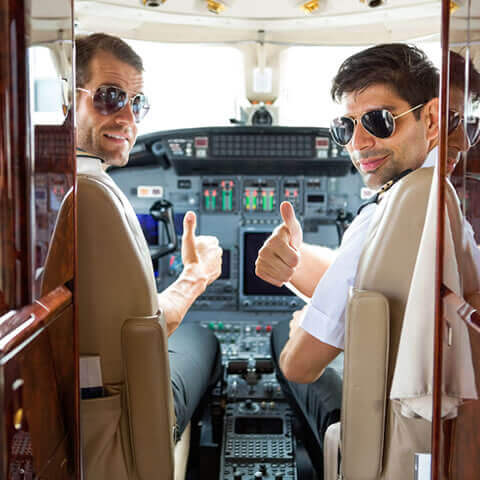
Few jobs are harder on the body than flying for a living. Irregular hours, time-zone hopping, long stretches sitting at altitude, hotel food, and broken sleep all pull against the strength, stamina and clear head the job demands. At Charter-A, we spend our days around pilots and cabin crew — the people who keep private aviation moving — so we wanted to put together a straight-talking guide to staying fit when your week never looks the same twice.
Summary — the key points
- Crew fitness is sabotaged less by laziness than by disrupted routine: shifting body clocks, short layovers, and limited kit.
- Short, frequent sessions beat occasional long ones. Twenty focused minutes you do beats an hour you keep skipping.
- Strength training is the priority, not endless cardio — it protects your back, joints, and metabolism against the effects of a sedentary, irregular schedule.
- Sleep and hydration are performance tools, not afterthoughts, especially across time zones.
- When you’re home around base, a private coach who works around an unpredictable roster is worth more than a busy commercial gym membership you rarely use.
Why staying fit is genuinely harder for crew
It isn’t a willpower problem. The job stacks the deck:
- A moving body clock. Early starts, red-eyes and rotating rosters mean your sleep and meal timing are constantly reset, which blunts energy, recovery and appetite control.
- Long periods seated. Hours in the flight deck or cabin shorten hip flexors, stiffen the lower back and switch off the glutes — a recipe for the nagging back and neck issues common in aviation.
- Limited time and kit. A 14-hour layover in an unfamiliar city with a tired body and a small hotel gym is not where most people feel like training.
- Food on someone else’s schedule. Airport lounges, crew meals and late-night hotel menus make consistent nutrition tough.
The fix isn’t a heroic regime. It’s a few reliable habits that survive contact with a real roster.
Short sessions that fit a roster
The single biggest win is dropping the idea that a workout must be long. For crew, frequency and consistency beat duration every time.
- Twenty minutes, done often. Three or four short strength sessions a week will do far more than one occasional marathon gym trip you can’t sustain.
- Train movements, not muscles. Squats, hinges, presses, rows and carries hit everything and need almost no equipment.
- Use what’s in the room. A hotel room gives you bodyweight squats, lunges, press-ups, planks and hip bridges — enough for a complete session with zero kit.
- Anchor it to the day, not the clock. “Before I shower after landing” survives jet lag in a way that “7 am” never will.
Strength first, cardio second
It’s tempting to treat fitness as cardio, but for a job that involves a lot of sitting and irregular sleep, strength training is the higher priority. Building and keeping muscle protects your back and joints, supports your metabolism when meal timing is all over the place, and keeps you capable and resilient over a long career. Two or three short strength sessions a week, with a brisk walk on layovers for movement and headspace, is a far more durable plan than grinding out cardio you don’t enjoy.
This matters more, not less, as you get older. Holding on to strength and mobility through your forties, fifties and beyond is what keeps you mobile, independent and feeling good in a demanding job — and well past it.
Sleep, hydration and food on the road
- Treat sleep as training. Recovery is where fitness happens. Black out the room, keep it cool, and protect your wind-down, even when the timing is odd.
- Hydrate deliberately. Cabin air is dry and dehydration masquerades as fatigue and hunger. Carry a bottle and keep topping up.
- Build a default meal. Decide in advance what “good enough” looks like — protein plus vegetables plus a sensible carb — so you’re not negotiating with a late-night menu while exhausted.
Training when you’re home around base
The hardest fitness to maintain is the kind that depends on a fixed weekly slot — exactly what crew don’t have. When you’re home around base, what works is coaching built around an unpredictable schedule rather than a commercial gym membership you pay for and rarely use.
For crew based around Gatwick, that’s very doable. Tracy, a private personal trainer in Horley, minutes from Gatwick, runs exclusive one-to-one sessions in a private gym — no crowds, no waiting, and the flexibility to schedule around a week-to-week changing roster. She also offers online and hybrid coaching, so the programme follows you on layovers, and you train to the same plan whether you’re home or away. For a job that demands strength, resilience and a clear head, that kind of consistency is exactly what’s hard to find anywhere else.
The bottom line
You don’t need a perfect routine — you need a resilient one. Short, frequent strength sessions, sleep and hydration treated as tools rather than luxuries, a default meal you can fall back on, and proper coaching for the weeks you’re home. Do that, and the roster stops dictating your fitness.
Charter-A arranges private jet, helicopter and air taxi charter for clients across the UK and worldwide — and we look after the crews who make it happen. Explore our private jet charter services or call us on 020 7781 8094, 24/7.
