
Private Jet vs Commercial Air Travel — a Practical Comparison for Luxury and Business Travellers
Private air travel means on‑demand charters and bespoke aircraft services that give you exclusive cabin use, flexible routing and a personalised crew. Commercial air travel refers to scheduled airline services that move many passengers on fixed routes and timetables. This guide breaks down the practical differences between the two, quantifies the time and cost trade‑offs, and sets out common use cases for executives, high‑net‑worth individuals and businesses. You’ll see how privacy, scheduling flexibility, airport access, safety oversight and onboard amenities compare across private jets, helicopters and air taxis versus conventional airlines — and how those differences deliver measurable value. We also map features, provide clear cost and time examples, and finish with guidance on choosing an operator and requesting a charter for urgent or luxury travel.
What makes private air travel different — and why it matters
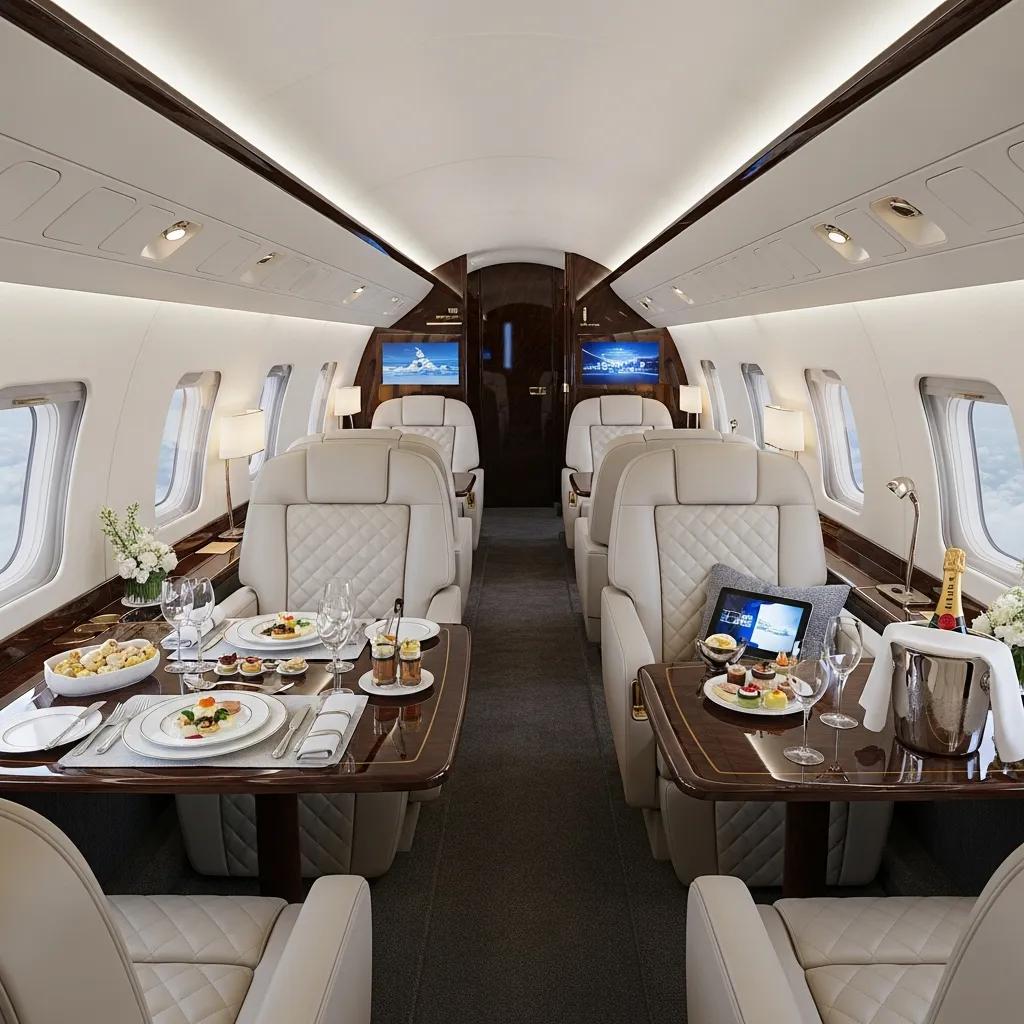
Private air travel hires an entire aircraft for a person or group, delivering privacy, bespoke service and flexible schedules that boost productivity and comfort. Those benefits come from exclusive cabin access, private terminals (FBOs) and the ability to depart and route on demand, which cuts ground time and lets you work confidentially in transit. Charters typically reduce door‑to‑door times and allow tailored catering, seating plans and pet arrangements — concrete advantages for time‑sensitive or privacy‑sensitive missions. That’s why executives, urgent cargo movements and high‑profile meetings often favour private travel. The sections that follow explain how jets create luxury and why helicopters and air taxis are especially useful for short regional hops.
How private jet charter delivers luxury, privacy and genuine flexibility
Chartering a private jet provides luxury through lower passenger density, customisable cabins and attentive crew and ground handling. Privacy comes from exclusive control of the cabin and private terminal procedures, so confidential discussions and uninterrupted working time are realistic. Flexibility comes in the form of on‑demand departures and bespoke routing: operators can adjust departure times and use airfields closer to your destination, reducing many connection risks and long transfers. Together, these elements increase productivity for business travellers and comfort for leisure passengers — especially on short, point‑to‑point trips. Next, we examine the specific role of helicopters and air taxis in urban and regional transfers.
When helicopters and air taxis out perform scheduled options

Helicopters and air taxis specialise in short, direct transfers that bypass road congestion and cut door‑to‑door times for city‑to‑city and city‑centre‑to‑airport journeys. Their value lies in access to rooftop or nearby helipads, proximity to final destinations and quick turnarounds — ideal for events, time‑critical meetings or tight airport connections where minutes count. For routes of roughly 150–200 nautical miles, or where surface links are poor, helicopters and air taxis can be the fastest and most convenient option compared with scheduled flights and ground transfers. They frequently complement private jets on multi‑leg itineraries. Below, we contrast this with how commercial operations work.
Charter‑A Ltd is a UK‑based private aircraft charter provider offering 24/7 private jet, helicopter and air taxi charters, including air cargo. We focus on luxury, convenience, privacy and personalised travel for high‑net‑worth individuals, corporate clients and businesses. Our operators work under CAA or EASA-approved AOC standards, and we are a member of the Air Charter Association. If you need bespoke planning or a rapid quote for an executive trip or urgent cargo movement, request a quote or contact Charter‑A Ltd to discuss availability and options.
How commercial air travel works — and where it can slow you down
Commercial air travel runs on scheduled services and a hub‑and‑spoke model: aircraft and crews serve set routes at set times to maximise load factors and keep per‑seat costs low. That model delivers predictable pricing and frequent departures on major routes, but it also enforces fixed timetables, standardised boarding and security procedures and sometimes indirect routings via hubs. For passengers, this can mean longer total journey times due to early check‑in, security queues, transfers, and terminal congestion — all of which reduce effective productivity for business travellers. Understanding the trade‑off between per‑seat efficiency and time or comfort constraints helps explain why some clients choose to charter despite the higher direct cost. The next subsections outline typical passenger workflows and common pain points.
Passenger experience on commercial flights — what to expect
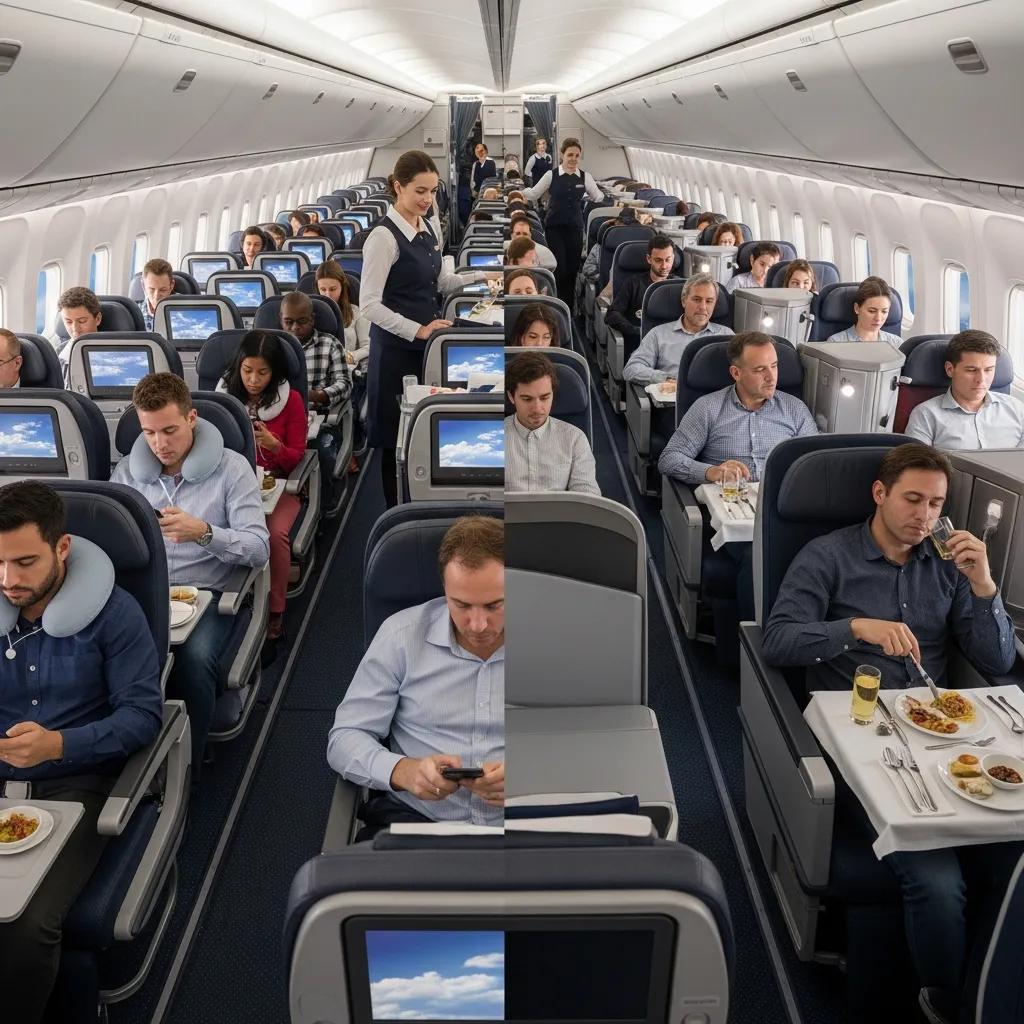
Commercial travel is organised around cabin classes — economy, business and first — each with different seat density, service levels and pricing driven by yield management. Passenger processes commonly include scheduled check‑in, public security screening, boarding by group and potential connections through hubs to maintain safe, on‑time network operations. In‑flight service follows standardised catering and entertainment offerings, with premium cabins delivering extra space and lounge access but still sharing busy terminal environments. Baggage rules and ancillary fees are typical. Those standard processes provide consistency and scale, but they limit bespoke, per‑passenger customisation and can create friction for privacy‑ or time‑sensitive travellers.
Common time and comfort challenges on scheduled services
Delays, tight connections, and long queues are frequent frustrations that can eat into meeting time and increase the risk of missed transfers — particularly on complex itineraries through multiple hubs. Comfort constraints stem from higher seat density and limited personal space in standard classes, making it difficult to work or rest on short flights. Security screening and baggage reclaim add predictable overhead to door‑to‑door times, while network disruptions can cascade across schedules and amplify delays. For executives who require punctuality and uninterrupted work time, these operational factors often outweigh the lower per-passenger ticket cost. With those limitations in mind, the next section offers a side‑by‑side comparison of private and commercial options.
Key differences between private and commercial air travel
Private and commercial travel diverge on cost structure, time efficiency, privacy, airport access, safety oversight and onboard amenities — and each difference influences the charter vs scheduled decision. In short, private charters exchange higher direct cost for time savings, bespoke service and routing flexibility; commercial travel offers lower per‑passenger fares and frequent departures on common routes. Below, we break costs into comparable components, quantify typical door‑to‑door time differences and compare amenity levels to help you assess which mode suits specific missions such as same‑day multi‑city meetings, urgent cargo shipments or short regional hops.
Cost drivers differ markedly between private charters and commercial tickets. Private pricing usually comprises an hourly aircraft rate, repositioning (positioning) legs when an aircraft must fly empty, landing and handling fees, and sometimes crew overnight expenses — all bundled into a single charter quote. Commercial fares are seat‑based and may include ancillary charges for baggage and extras; their per-passenger headline price is lower but does not cover concierge service or bespoke routing. The table below outlines the core line items and how they contribute to total trip pricing.
The table shows private charters consolidate mission‑specific costs into a comprehensive quote, while commercial travel separates seat fares and add‑ons. That transparency makes it easier to compare total trip value. Next, we give practical guidance on turning these components into a decision based on time, group size and purpose.
How do costs compare between private charters and commercial tickets
Cost comparisons should look beyond headline figures to consider per‑person value, repositioning likelihood and group size. Private charters become more cost‑effective for groups because the aircraft cost is shared; solo travellers often find scheduled tickets cheaper. Private charter quotes are driven by hourly rates, possible repositioning legs, airport fees and bespoke services — producing a transparent mission price. Commercial fares usually show a lower upfront cost but may include ancillaries and the implicit cost of lost productive time due to fixed schedules and transfers. Charter‑A Ltd provides transparent quotes and 24/7 booking support to help clients evaluate full trip cost and value — request a quote to compare mission‑level options for your itinerary.
The earlier cost table outlined the main components and why transparency matters; understanding those drivers helps determine whether time savings and privacy justify a charter. The next table quantifies typical door‑to‑door differences for representative routes.
How scheduling flexibility and time efficiency differ
Private travel shortens door‑to‑door time through private terminal access, minimal pre‑flight processing and on‑demand departure slots, enabling same‑day multi‑stop itineraries that scheduled services cannot match. Practically, private passengers board at FBOs with streamlined ground handling and can depart shortly after arrival; commercial travellers usually follow fixed check‑in and security windows that add predictable overhead. These time benefits are most visible on regional or short‑haul missions and in congested cities where ground travel dominates total journey time. The flexibility also supports last‑minute itinerary changes and urgent cargo tasks that scheduled services rarely accommodate — so operators who offer round‑the‑clock availability are essential for time‑critical missions.
Privacy and comfort — what to expect in each option
Private cabins give exclusive access, configurable seating and the ability to hold confidential meetings or rest without interruption. Commercial cabins — particularly economy — have higher seat density and shared spaces, which limit privacy and focused work. The difference comes down to occupancy and access control: a private charter effectively becomes a closed, client‑dedicated workspace with bespoke catering, tailored Wi‑Fi and pet arrangements, whereas commercial services standardise offerings across many passengers. For travellers who need discretion or uninterrupted productivity, private charters offer material advantages that should be weighed against cost and routing.
Airport access and routing — more direct options with private travel
Private operators routinely use FBOs and smaller airfields closer to your destination, enabling direct, point‑to‑point routing and access to airports not served by scheduled carriers. This expanded access reduces ground transfer time and avoids busy hubs, giving charters a practical speed advantage. Commercial airlines optimise for passenger volumes with hub‑and‑spoke networks, which can require indirect routings and longer connections. Put simply: private travel optimises for mission efficiency; commercial travel optimises for network economics — your priority determines the right choice.
Security and safety — what to check
Both private and commercial operations are regulated by authorities such as the CAA or EASA; safety is enforced through operator certifications, crew training and maintenance regimes, and AOC‑holding operators are subject to oversight. Passenger screening differs from public security checkpoints, but operator vetting is the critical buyer safeguard: choosing an AOC‑approved operator and one with recognised association membership provides practical assurance of regulatory compliance. In short, safety is a regulated, selectable attribute — pick your operator carefully.
Amenities and onboard service — tailored versus standardised
Private charters offer bespoke catering, cabin reconfiguration and the option to set up connectivity and meeting layouts as required. Commercial airlines provide tiered amenities tied to class and route length. Mechanically, private flights can provide personal chefs, tailored menus, and interior layouts, while airlines must scale standard catering and entertainment for many passengers. The table below summarises typical differences by service category.
The table highlights where private charters excel in flexibility and bespoke service — attractive to clients who prioritise comfort and mission‑specific support. Next, we describe who benefits most from each travel mode.
Who should choose private travel — and when commercial makes sense
Private air travel is best suited to high‑net‑worth individuals, corporate executives, teams travelling together and businesses with urgent cargo needs that value time savings, privacy and tailored handling. Commercial travel remains the sensible choice for mass‑market leisure passengers, budget‑minded travellers and high‑volume routes where frequent scheduled departures and low per‑passenger cost matter. Common personas for private solutions include executives needing same‑day multi‑city meetings, event organisers organising group transfers and logistics teams handling time‑critical cargo. Match the persona to priorities — cost, time or privacy — to pick the right mode for each trip.
Why work with Charter‑A Ltd for private air travel
Charter‑A Ltd acts as a specialist intermediary for private jets, helicopters, air taxis and air cargo charters, offering 24/7 availability, personalised planning and strict adherence to recognised safety standards. Based in the UK, we operate with CAA or EASA-approved AOC oversight and are a member of the Air Charter Association, reflecting our commitment to governance and operator vetting. Our team provides round‑the‑clock booking support and mission planning to help you compare transparent quotes, coordinate repositioning logistics and match aircraft to your mission. For organisations and individuals seeking a single point of contact for executive charters or urgent cargo, Charter‑A Ltd welcomes enquiries and quote requests.
How Charter‑A Ltd combines luxury, safety and personalised service
We pair hands‑on trip planning and concierge‑style handling with careful operator screening to deliver safe, luxury‑focused journeys. Our model emphasises bespoke arrangements — tailored catering, cabin configuration, and ground handling — while relying on AOC‑approved operators to meet maintenance and crew-training standards. Safety is managed by selecting compliant partners and using clear operational checklists for every mission, so clients enjoy luxury without compromising regulatory adherence. From planning to arrival, we provide end‑to‑end support that reduces friction and ensures privacy, punctuality and comfort.
Fleet choice and 24/7 readiness — what sets us apart
Charter‑A Ltd arranges access to a range of aircraft types — private jets, helicopters, air taxis and freighter‑capable aircraft — so we can match payload and mission profile to the right platform. Our 24/7 booking and on‑demand coordination support last‑minute travel and urgent cargo tasks, providing operational readiness when plans change. That always‑on capability is especially valuable for corporate clients and businesses that require flexible logistics and fast decision-making. If you need a rapid, tailored solution, contact Charter‑A Ltd for a prompt quote and availability check.
Frequently Asked Questions
What are the environmental impacts of private jet travel compared to commercial flights?
Per passenger, private jet travel usually has a higher carbon footprint because fewer people are on board. In some scenarios — for example, small groups flying direct on routes where commercial options require lengthy connections — the total emissions per trip can be more comparable. Many private operators are investing in sustainable aviation fuels and verified carbon offset programmes to reduce impact. Consider emissions alongside time savings and mission needs when choosing how to travel.
How can I choose the right private jet operator?
Key selection criteria include AOC (Air Operator Certificate) approval, membership of recognised industry associations such as the Air Charter Association, recent customer feedback and the range of available aircraft. Ask for operator credentials, maintenance history and references. Request a quote and discuss your exact requirements to evaluate responsiveness and service level before you commit.
What should I expect during the booking process for a private jet?
The booking process starts with an inquiry detailing dates, destinations and passenger numbers. The operator will propose aircraft options and pricing. After you select a solution, you’ll receive a formal quote and contract outlining payment terms and identification requirements. The operator coordinates logistics — catering, ground transport and handling — to deliver a seamless journey.
Are there any restrictions on luggage for private jet travel?
Private travel is generally more flexible with luggage than commercial services, but each aircraft has weight and size limits that vary by type. Discuss your baggage and special items (for example, sports equipment or oversized cargo) during booking to confirm capacity and any additional handling requirements.
Can I make last-minute changes to my private jet itinerary?
Yes — flexibility is a core advantage of private travel. Operators often accommodate last‑minute adjustments to departure times or destinations, subject to aircraft and crew availability. Inform your provider as soon as possible to maximise the chances of an on‑time change. This responsiveness is particularly helpful for business travellers with dynamic schedules.
What amenities can I expect on a private jet?
Private jets commonly offer bespoke catering, comfortable seating that can be reconfigured for meetings, high‑speed Wi‑Fi, entertainment systems and private lavatories. Amenity levels vary by aircraft type, so share your priorities with the operator to tailor the onboard experience to your needs.
How does the check-in process differ for private jets compared to commercial flights?
Check‑in for private jets is streamlined: passengers typically arrive at an FBO and can board minutes before departure, avoiding long security queues and standard check‑in procedures. This efficiency saves time and reduces the stress often associated with commercial terminals.
Is private jet travel more expensive than commercial flights?
On a per‑seat basis, yes: chartering an entire aircraft usually costs more than buying a single scheduled seat. But charters can deliver offsetting value through time savings, privacy, and operational flexibility, thereby reducing opportunity costs. For groups, the per‑person price can be competitive, and for high‑value missions, the recovered productive time often justifies the spend. For a precise mission quote and transparent pricing, request a quote from Charter‑A Ltd to compare the total trip value.
What business benefits does private flying deliver?
Private travel saves time, provides confidential working environments, opens access to secondary airports and supports flexible scheduling for same‑day multi‑city itineraries. These advantages improve executive productivity, speed decision cycles and reduce travel‑related stress — often making charters a strategic choice for businesses where time and discretion matter.
How much time does private air travel save versus commercial flights?
Private travel cuts time by removing long check‑in windows, using private terminals for rapid boarding, offering direct routing that avoids hub connections and landing at airfields closer to final destinations. On regional trips, these efficiencies can halve door‑to‑door times and enable itineraries impossible on scheduled services. Quantify savings by comparing sample door‑to‑door times for your route and factoring in the productive hours you regain.
Are private jets safer than commercial flights?
Both sectors are regulated and subject to oversight by authorities such as the CAA and EASA; safety depends on operator standards, maintenance practices, and crew training rather than on aircraft category alone. Choosing an AOC‑approved operator with recognised industry credentials is the best practical assurance of regulatory compliance and operational quality. Ask for operator documentation and maintenance records when assessing safety.
- Private air travel offers privacy, flexibility and time savings that support high‑value business missions.
- Commercial travel provides cost efficiency and frequent service for mass‑market routes and budget‑minded passengers.
- The charterdecision rests on mission priorities — whether time, privacy, and bespoke service outweigh price and schedule frequency.
For tailored comparisons or to request a charter quote for executive travel or urgent cargo, contact Charter‑A Ltd to discuss availability and options.
Conclusion
Private air travel delivers clear advantages in privacy, flexibility and time savings — qualities that suit high‑value business missions and time‑sensitive logistics. Commercial flights remain the practical choice for frequent, cost‑sensitive travel on well‑served routes. Understanding these trade‑offs will help you choose the right mode for each trip. For a bespoke comparison or a transparent charter quote, contact Charter‑A Ltd today.
