
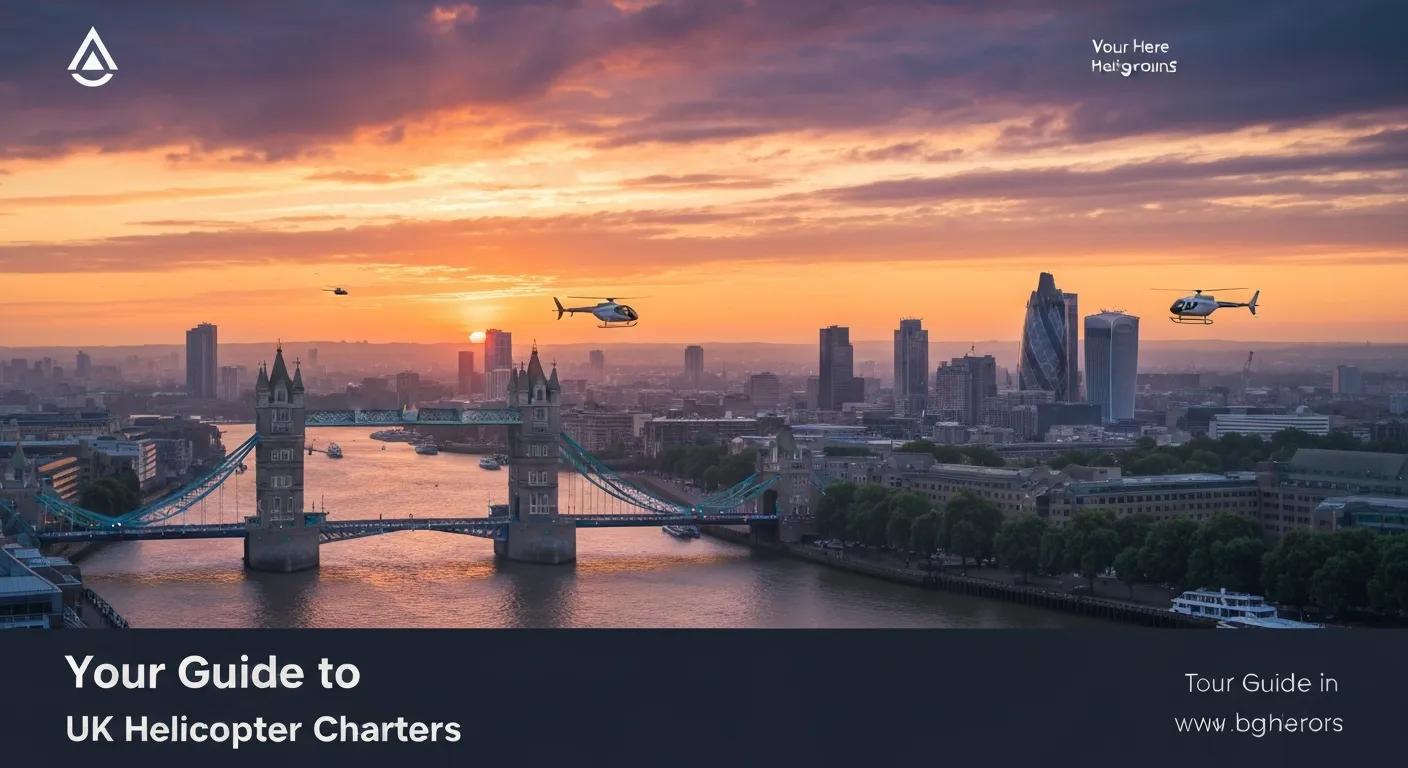
model/class Your Guide to UK Helicopter Charters
Private helicopter charter in the UK gives you on‑demand, point‑to‑point air travel with a hired rotorcraft and professional crew — faster city‑to‑airport transfers, flexible routing and a discreet experience compared with scheduled services. This guide explains what charter services deliver, why direct access to heliports and flexible schedules matter for business and event travel, and how pricing, aircraft selection and regulatory standards affect safety and reliability. You’ll find the main cost drivers and typical hourly ranges, the common service types (executive, event, scenic and transfers), a clear booking workflow, CAA safety expectations, and model‑level comparisons to match capacity and range to your trip. If you’re ready to enquire, there’s a short, neutral booking prompt showing what operators need to prepare a clear, itemised quotation and booking timeline. The sections that follow break down costs, services, booking steps and safety so you can plan a charter that fits passenger numbers, luggage and schedule constraints.
Ready to move from planning to booking? Request a quote from an operator with travel dates, passenger count, preferred aircraft class and pick‑up/drop‑off sites. Operators will outline the pricing components, proposed aircraft and any deposit requirements, and confirm permissions needed for your itinerary. That first enquiry turns planning into a formal proposal while the rest of this guide keeps things impartial and practical. Read on to compare costs, services and aircraft so you can decide with confidence.
How Much Does a Private Helicopter Charter Cost in the UK?
Charter costs in the UK are typically quoted as an hourly airborne rate plus ancillary charges such as landing fees, repositioning (ferry) time, crew standby and VAT. Final quotations vary by aircraft type, distance and any airfield or landing‑site permissions. Rates differ across light singles/twins, medium twins and larger VIP twins; operators often sell block hours for transfers or event shuttles. Flight time is usually the largest cost driver, but repositioning and landing/site fees can materially affect short sectors. The table below summarises common cost components and example ranges so you can see which items most influence a quote.
Key cost factors are listed next to explain their role and help you read formal quotations with confidence.
- Flight time / hourly rate: The charge for each hour the aircraft is airborne for your flight.
- Repositioning (ferry) fees: When the helicopter must fly empty to or from your start/end point.
- Landing / site fees: Charges set by heliports, airfields or temporary event landing areas.
- Crew and standby costs: Pilot and crew time, overnighting or standby for events.
- Fuel surcharges & VAT: Variable fuel costs and any applicable VAT on the charter.
These are the items you’ll commonly see on a charter quotation — transparent breakdowns make comparisons straightforward.
What Factors Influence Helicopter Hire Costs in the UK?
Several variables affect the headline charter price: aircraft model and class, trip length and flight time, number of sectors and repositioning required, heliport or private landing‑site charges, crew scheduling and overnight costs, seasonal demand for events, and any regulatory permissions for special sites. Aircraft choice matters because seating, range and cruise speed determine how quickly a trip is completed and how much fuel is consumed — all of which feed into hourly rates. Event bookings can add logistics such as permits, marshals and staging fees; planning these in advance prevents surprises. Weather and last‑minute route changes can also increase fuel burn or require diversion costs, so operators commonly include contingency terms in formal quotes.
To limit cost risk: ask for single‑sector pricing, confirm whether repositioning is included, and request an itemised quote that separates airborne time from ancillary charges so you can compare offers fairly.
What Are the Average Prices for Different Helicopter Models?
Hourly ranges vary by helicopter class and typical use case. Light singles or light twins are best for short executive hops and scenic flights; medium twins suit longer transfers with more cabin space; and larger VIP twins handle group transfers and event shuttles. Matching aircraft capability to passenger count and trip distance keeps costs efficient — selecting a bigger aircraft than needed increases hourly cost without adding value. The table below maps model classes to typical roles and cost expectations to help selection.
Choosing the right class optimises cost‑per‑passenger while meeting luggage and comfort needs; share passenger and luggage lists with your operator to refine the quote.
Any price guidance should be verified with a personalised quotation: costs vary by operator, season and landing sites. To get a tailored quote, give travel dates, passenger numbers, pick‑up/drop‑off sites and any event requirements; operators will reply with an itemised proposal separating airborne time from repositioning and landing/site charges so you can compare like for like.
What Types of Helicopter Charter Services Are Available in the UK?
UK helicopter charter services cover a range of offerings: executive transfers for time‑sensitive business travel; event and festival shuttles with staged operations; scenic tours for leisure; airport transfers for fast connections; and specialised offshore or emergency operations for industry. Each service type prioritises different operational demands — executive travel focuses on punctuality and discretion, event transfers on logistics and staging, and scenic flights on routing and passenger experience. Knowing the service types helps set realistic lead times, permissions and pricing expectations.
Below is a concise list of the main service categories and their primary benefits.
- Executive / corporate charter: Fast, discreet point‑to‑point travel to save time and avoid road congestion.
- Event / festival transfers: Scheduled shuttles with staging and coordinated landing permissions for large gatherings.
- Scenic tours: Curated leisure flights focused on views and experience with flexible routing.
- Airport transfers: Timed city‑to‑airport links that materially reduce door‑to‑door travel time.
- Offshore / specialised operations: Purpose‑built transfers for industry or emergency response with strict safety procedures.
These categories show how each service aligns with client objectives and operational needs; selecting the correct type sets expectations for lead time, permissions and costs.
How Do Luxury and Executive Helicopter Charters Differ?
Luxury charters emphasise bespoke interiors, concierge services and premium amenities; executive charters prioritise punctual, efficient point‑to‑point transport with business‑friendly cabin layouts. Luxury options often include upgraded seating, curated refreshments and white‑glove ground handling; executive charters focus on speed, discretion and reliable access to corporate heliports and airport links. Expect additional costs for bespoke features and dedicated concierge beyond the base airborne rate — specify your service level when requesting a quote so the operator can itemise extras.
Knowing this distinction makes it easier to choose whether to prioritise comfort and extras or pure efficiency and direct routing. The next section on event hire explains how logistics and permissions increase planning requirements for large gatherings.
What Are Event Helicopter Hire Options for UK Festivals and Sporting Events?
Event hire packages commonly include coordinated shuttle services between designated landing sites, ground transfer logistics, staging marshals and pre‑arranged landing permissions. These packages require early planning and deposits to secure slots during peak periods. Major events may need temporary landing zones, liaison with local authorities and additional safety marshals — all of which add operational cost and need lead times of weeks rather than days. Operators often offer block‑hour arrangements for event shuttles that cover multiple legs and standby crew, giving organisers clearer overall costs. Confirm passenger throughput, pick‑up windows and weather contingency plans in the event brief.
Event logistics need precise coordination — provide passenger manifest estimates and your event timetable so the operator can secure permissions and allocate suitable aircraft and crew.
How to Book a Private Helicopter Charter in the UK?
Booking a private helicopter charter in the UK typically follows this sequence: an initial enquiry with trip details, an itemised quote from the operator, confirmation with deposit and paperwork, operator‑led permissions and airfield coordination, and final pre‑flight planning including passenger manifest and safety briefings. The process turns your itinerary into an executable flight plan that meets regulatory, safety and operational needs. Providing clear information at enquiry improves quote accuracy and helps avoid unnecessary repositioning costs. Below is the common step‑by‑step flow from enquiry to confirmed charter.
- Provide enquiry details: travel dates, pick‑up/drop‑off sites, passenger and luggage numbers.
- Receive itemised quote: airborne time, repositioning, landing fees, crew and VAT separated.
- Confirm booking: accept the quote, pay deposit if required and sign terms and conditions.
- Operator arranges permissions: heliport slots, airfield access, event permits where applicable.
- Pre‑flight coordination: passenger manifest, safety briefings and day‑of logistics confirmed.
This sequence sets out both client responsibilities and common operator actions; following it reduces last‑minute complications and keeps confirmation smooth.
What Is the Step-by-Step Booking Process for Helicopter Hire?
Start with a clear enquiry: give exact dates, preferred flight windows, passenger count and luggage so the operator can choose the correct aircraft and provide an accurate price. When you receive an itemised quote, check inclusions and exclusions — watch for repositioning and landing/site fees, cancellation terms and whether VAT or fuel surcharges apply. On acceptance, pay any deposit and provide required documentation such as ID for passenger manifests; the operator will then secure heliport slots and any special permissions. In the days before the flight expect confirmation of crew assignments, weather contingency plans and a final checklist for passenger arrival times and luggage limits. For events or peak periods, allow longer lead times to secure aircraft and slots.
Giving complete information at enquiry speeds up quoting and helps the operator issue a firm price and schedule, reducing the chance of last‑minute changes or surcharges.
How Can You Get a Quote and Confirm Your Helicopter Charter?
To get an accurate quote, supply travel dates and times, number of passengers, luggage details, exact pick‑up/drop‑off sites and any event‑specific requirements. The operator will return an itemised quote showing airborne hours, repositioning fees, landing charges and applicable taxes. A formal quote usually lists the selected aircraft model or class, estimated flight time, a price breakdown, booking conditions and validity period — read these carefully and ask for clarification on any estimates. Confirmation normally requires written acceptance, a deposit if stipulated, and passenger details for manifests and security checks. Operators will also confirm insurance cover, pilot assignments and any permissions needed for private landing areas.
Once you accept and the deposit clears, the operator issues confirmation and begins operational preparations, keeping you informed of any regulatory or weather‑related changes.
What Safety and Regulatory Standards Govern Helicopter Charter in the UK?
Regulatory oversight for helicopter charters in the UK is led by the UK Civil Aviation Authority (CAA), which sets standards for operator certification, airworthiness, pilot licensing and safety management systems. Compliant operators must demonstrate maintenance regimes, crew qualifications and audited safety processes. The CAA requires an appropriate Air Operator Certificate and adherence to maintenance schedules and crew training protocols. For passengers, proof of compliance is visible in clear documentation, safety briefings and the operator’s licences and maintenance records. Understanding these foundations reassures travellers about the robustness of charter operations.
The following subsection explains how the CAA regulates charters and what to look for when verifying an operator.
How Does the UK Civil Aviation Authority Regulate Helicopter Charters?
The CAA enforces operator certification through Air Operator Certificates, oversight audits and requirements for approved maintenance schedules and safety management systems. Pilots must hold the correct licences and type ratings for their helicopter, and operators must keep maintenance and incident records for CAA review. This framework ensures minimum standards for crew training, aircraft condition and operational planning. When assessing an operator, ask if they hold a CAA‑approved certificate and request confirmation of pilot qualifications and maintenance oversight — these are the clearest indicators of regulatory compliance.
Regulatory compliance reduces operational risk and underpins customer trust, which is especially important for executive travel and event transfers.
What Safety Measures Are in Place for Private Helicopter Travel?
Operational safety measures include pre‑flight passenger briefings, technical checks and maintenance logs, crew briefings on weather and alternates, luggage and weight checks to ensure weight‑and‑balance compliance, and contingency plans for adverse weather or airfield closures. On the day, passengers receive instructions on boarding, seatbelt use and stowage, plus an overview of emergency equipment and procedures. Operators run safety management systems that require reporting and corrective actions, and pilots perform risk assessments before every flight. These layers of procedure reduce risk and provide consistent operational standards for private helicopter travel.
Knowing these protocols helps travellers prepare and sets expectations for arrival times and luggage allowances.
Which Helicopter Models Are Best for Private Charter in the UK?
Choosing the right helicopter depends on passenger count, luggage, flight distance, desired cabin comfort and budget. Common models used in UK charters include light twins such as the AW109 for short executive hops, the H145 for a balance of space and range, the AW139 for larger groups and longer transfers, and the Bell 429 for flexible charter roles. Model choice affects hourly rates, speed and luggage capacity — matching needs to capability minimises unnecessary cost and improves the passenger experience. The table below compares representative models by seating, range and typical charter roles to help you decide.
What Are the Features and Capacities of Popular Models Like AW109 and H145?
The AW109 class provides compact cabins for 4–6 passengers, brisk cruise speeds and relatively efficient operating costs — a good choice for short executive hops. The H145 class offers a roomier cabin, better baggage capacity and longer range, making it suitable for transfers that need both comfort and endurance without moving to the largest twins. Both types require appropriate pilot type ratings and have specific luggage and cabin layouts that affect passenger comfort on longer journeys. When choosing between models, weigh passenger comfort, luggage volume and sector length to minimise repositioning and overall time aloft.
Understanding model features ensures you pick an aircraft that balances cost with operational needs for your itinerary.
How to Choose the Right Helicopter for Your Travel Needs?
Use a simple checklist to choose: confirm passenger count and total luggage, estimate flight distance and desired in‑cabin comfort, decide if private cabin space or group seating matters, and set a budget that includes hourly rates and ancillary charges. Examples: a two‑person executive hop into central London typically suits a light twin like an AW109; a six‑person group transfer to an event is best served by a medium twin such as an H145 or AW139. Discuss these criteria with the operator and request model‑specific luggage and seating diagrams to confirm fit. Clear requirements at enquiry produce more accurate quotes and reduce the chance of last‑minute aircraft swaps that change cost.
A short checklist and scenario alignment with aircraft types streamlines selection and supports comparable quotes from operators.
What Are Helicopter Transfer Services in London and Other UK Locations?
Transfer services operate between city heliports, regional airfields and major airports, saving door‑to‑door time by avoiding ground congestion and using direct routing to event sites or terminals. In London, central heliports and nearby airfields enable quick links to major airports and business districts; regional hubs support transfers to sporting venues and festivals. Transfer operations depend on heliport slots, ground handling and coordination with local air traffic services to manage sequencing and safety. Comparing door‑to‑door journey times with car travel often shows meaningful time savings where every minute matters for business travellers.
The next section explains the typical operational flow for transfers — check‑in, boarding and the time savings you can expect compared with ground transport.
How Do Helicopter Transfers Work for Airports and Point-to-Point Travel?
Transfers follow a simple flow: book and confirm a slot, arrive at the heliport at the designated check‑in time, complete a brief safety briefing and any weigh‑in, board for a short flight and disembark near your city or airport terminal. Heliport check‑in is generally quicker than commercial airports, and operators manage luggage within set limits to speed boarding. Time savings over road travel can be substantial on congested routes; for many executives a helicopter transfer cuts total door‑to‑door travel time significantly. Always confirm luggage allowances and arrival windows with your operator to coordinate last‑mile ground transport.
Knowing the day‑of procedures helps passengers arrive prepared and fully benefit from transfer time savings.
Which Locations and Airports Offer Helicopter Charter Services in the UK?
Primary heliports and regional airfields that support charter services include central urban heliports and nearby general aviation fields that accept private helicopter traffic. These sites typically host scheduled transfer links to major airports, event venues and city centres. Typical service patterns include central heliport to airport shuttles, regional hops to event staging areas and scenic routes from tourist hubs. Permissions and available landing sites vary by region, so operators will advise on the closest practical landing point and manage site‑specific permissions. When planning transfers, give preferred pick‑up and drop‑off locations so the operator can confirm feasibility and any special permissions required.
Operators will recommend the most practical heliport or airfield for your route and handle the permissions needed to secure landing slots.
If you’re ready to move from planning to firm booking, request a personalised quote by supplying trip dates, exact pick‑up and drop‑off locations, passenger numbers and luggage details. Expect an itemised quotation showing airborne time, repositioning and any heliport or event charges, plus a timeline for deposit and confirmation. After you accept a quote and complete paperwork, the operator will manage permissions and day‑of logistics so you can focus on travel arrangements. For time‑sensitive or event transfers, submit enquiries early to secure aircraft and slots during peak periods.
To enquire, provide the basic trip details above and ask the operator for a formal, itemised quotation and an availability window — this converts planning into a confirmed charter while keeping pricing and operational requirements transparent.
Frequently Asked Questions
What are the benefits of using helicopter charters for corporate travel?
Helicopter charters save time by avoiding road congestion and deliver direct access to city heliports, letting executives arrive quickly and stay productive. They also offer privacy and a quiet cabin conducive to meetings or rest. Flexible scheduling means operators can often accommodate last‑minute changes more easily than commercial flights, making charters well suited to busy professionals.
How far in advance should I book a helicopter charter?
Book at least a few weeks ahead when possible, especially for peak seasons or major events — early booking secures availability and gives operators time to arrange permissions and slots. Operators can sometimes accommodate last‑minute requests, but flexibility on timing and route may be required. Supplying detailed trip information at enquiry speeds up the process and improves your chances of getting the preferred aircraft and schedule.
Are there any restrictions on luggage when chartering a helicopter?
Yes. Weight and space limits are important for safe operations and each helicopter model has specific allowances. Passengers are advised to keep luggage to a minimum and to share luggage details at enquiry so the operator can confirm capacity. Operators will provide exact luggage dimensions and weight limits during booking.
What happens if the weather affects my helicopter charter?
Weather can affect operations and safety is the priority. If conditions are unsuitable, operators will assess options and may suggest rescheduling or rerouting. You’ll typically be informed in good time if changes are necessary. Operators usually have contingency plans — alternative landing sites or aircraft — to keep travel moving safely. Discuss weather policies with your operator when booking to understand potential impacts.
Can I customise my helicopter charter experience?
Yes — many operators offer customisation: bespoke flight routes, in‑flight catering and specific amenities. For corporate charters you can often add ground transport coordination or concierge services. Tell the operator your requirements when requesting a quote so they can propose a personalised package that meets your needs.
What should I expect during the pre-flight process for a helicopter charter?
Expect a streamlined check‑in: a short safety briefing, luggage weighing and a review of the flight plan. Operators verify passenger identities and conduct technical checks on the aircraft. Arrive at the heliport at the specified time to allow these procedures. Clear communication with the operator about arrival times and any special needs ensures a smooth pre‑flight experience.
