
How to Book Private Air Charter Services in the UK: Your Complete Guide to Private Jet, Helicopter, and Air Taxi Booking
Private air charter services provide on-demand air transport by arranging aircraft for individual or group travel, combining speed, privacy and flexible routing that commercial schedules cannot match. This guide explains what private air charters are, how brokers and operators work together, which aircraft types suit different trips, and how the booking lifecycle moves from enquiry to touchdown. Many travellers face delays, complex connections and loss of productive time; private charters solve these problems by offering direct routing, access to smaller airfields and tailored ground handling. You will learn how to choose between light, mid-size, and heavy jets, turboprops, and helicopters, how pricing is calculated in the UK market, and practical steps for requesting a quote or confirming a booking. The article also compares airports and private airfields, explains safety and regulatory standards under the UK Civil Aviation Authority, and offers pragmatic checklists for pet travel and international private flights. Keywords covered include: book a private jet flight, private jet booking, book a private helicopter flight,
and air taxi booking UK.
What Are Private Air Charter Services and How Do They Work?
Private air charter services are on-demand flights arranged for individual customers or groups, where an aircraft is chartered for a specific itinerary rather than flying a scheduled route. The mechanism combines an operator that owns or manages the aircraft and a broker or service provider that sources the best match for the client, coordinating pricing, positioning and ground handling to deliver door-to-door time savings. The principal benefit is bespoke routing and timing, allowing passengers to control departure points, arrival airports, and onboard services. Understanding the roles of operators and brokers helps travellers request accurate quotes and confirm compliant flights. The following subsection outlines the main aircraft categories you can choose from and how each suits different missions.
What Types of Private Aircraft Can You Book?
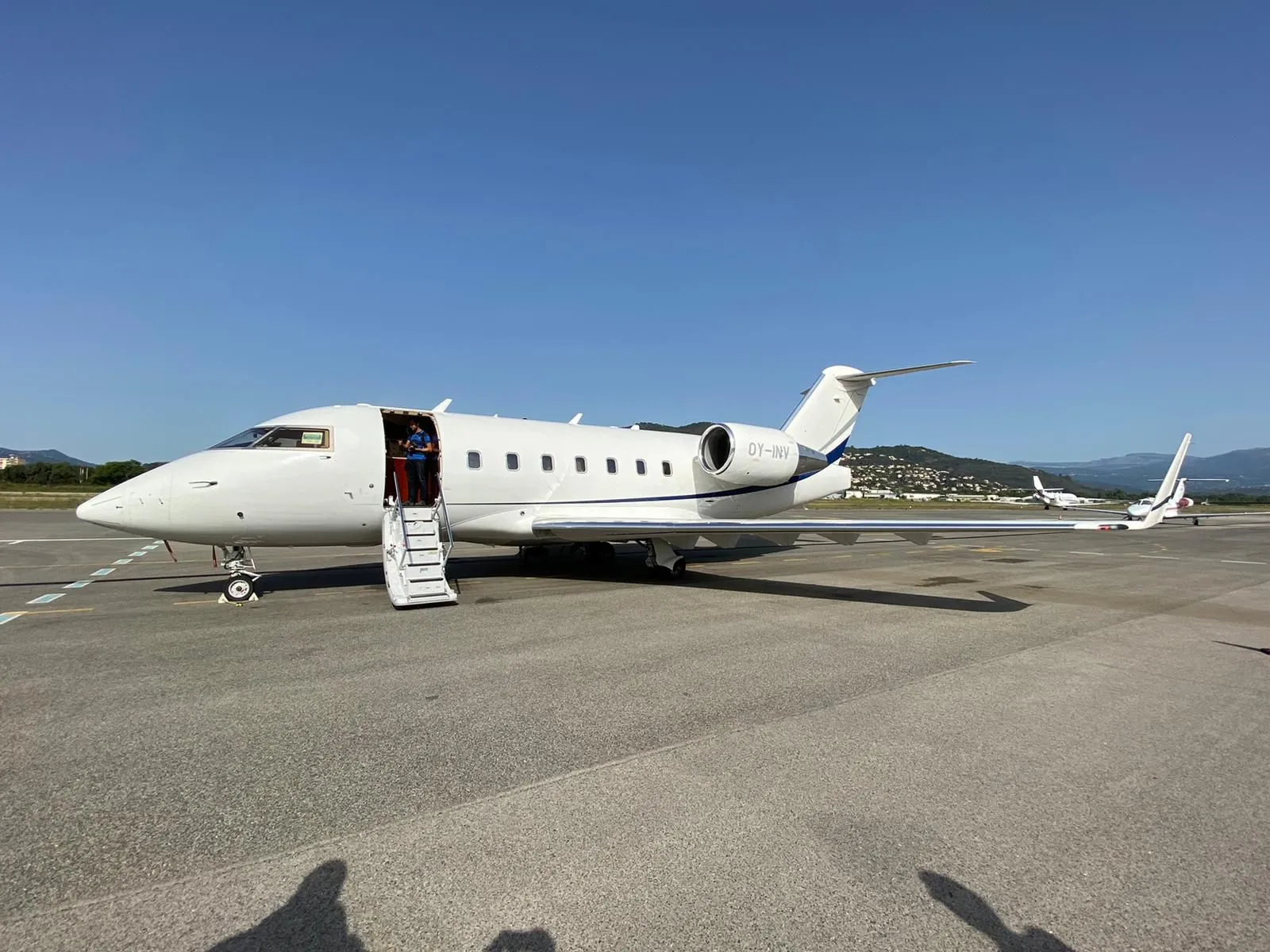
Private aircraft fall into categories—light jets, mid-size jets, heavy jets, turboprops and helicopters—that determine capacity, range and typical operating cost; selecting the right class matches mission profile to cost and comfort. Light jets suit short business hops with small groups, mid-size jets balance range and cabin space for medium distances, heavy jets deliver long-range intercontinental capacity and larger cabins, turboprops offer efficient short-field performance for regional destinations, and helicopters enable point-to-point access to helipads and remote sites. Choosing the correct aircraft reduces repositioning needs and overall charter cost while ensuring required luggage and range are covered. The table below summarises typical capacities, ranges and representative hourly rate bands to help match need to aircraft class.
This comparison clarifies how passenger count, range and mission profile determine aircraft selection; next we cover the step-by-step booking process so you can convert a chosen aircraft type into a confirmed trip.
How Does the Private Flight Booking Process Operate?

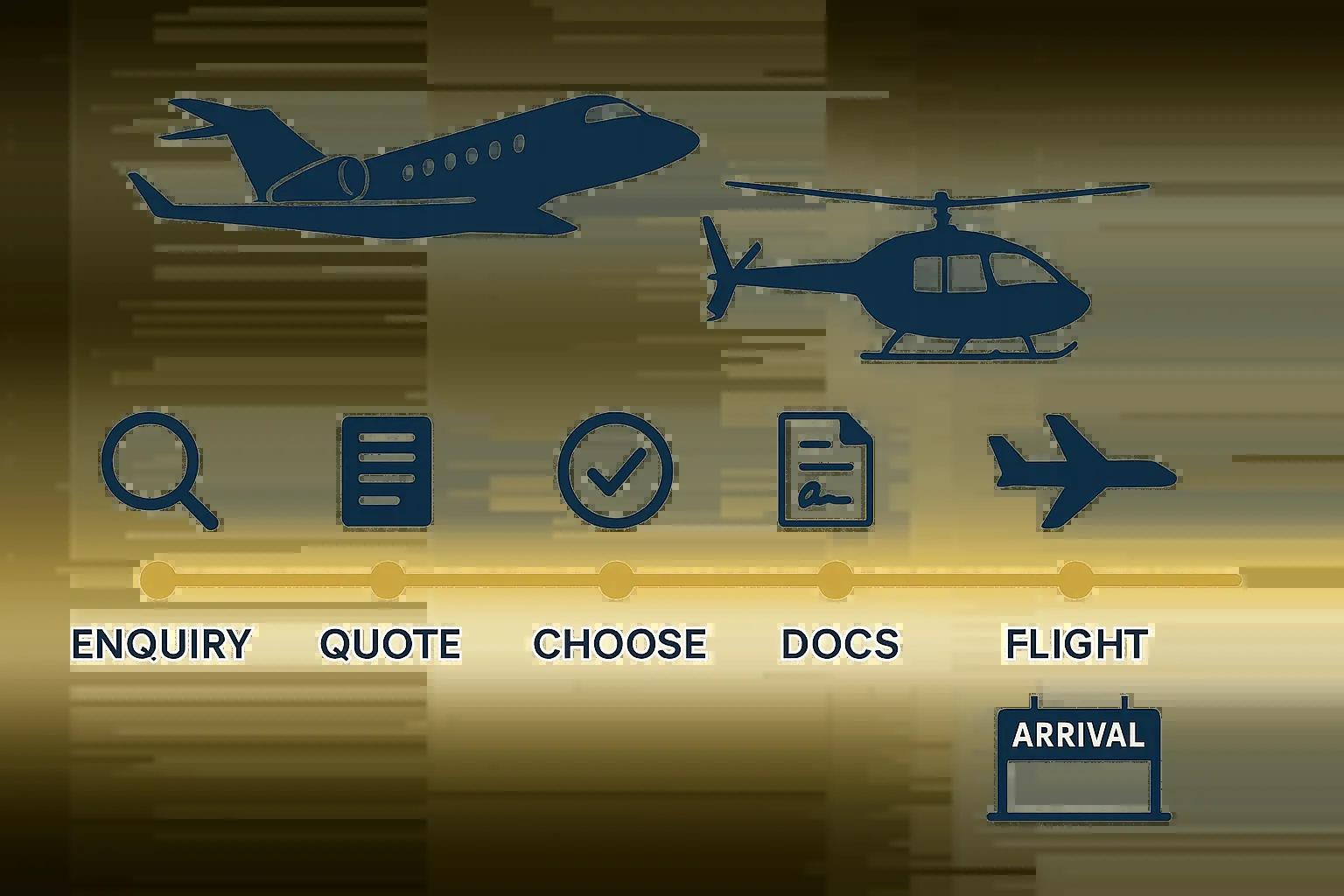
The private flight booking process follows a simple workflow: request a quote, receive options, confirm a selection, complete documentation and ground handling arrangements, then operate the flight. This mechanism lets operators position aircraft (repositioning) and coordinate FBO services so you arrive and depart through private terminals with minimal wait. Typical benefits include transparent routing, tailored catering and bespoke ground transport that match the flight profile. Expect lead times that vary from several days for scheduled charters to a few hours for air taxis or short helicopter hops; empty legs can provide lower-cost options but require flexibility.
- Provide basic trip details to request an accurate quote.
- Review aircraft options, pricing and any repositioning fees.
- Confirm the flight, submit passenger documentation and arrange ground handling.
- Complete payment terms and pre-flight checks before departure.
To request a quote or start a booking, you should be ready with the following information: travel dates and preferred times, number of passengers, luggage quantity and dimensions, routing (origin and destination airports), and any special requests (pets, catering, ground transport). This checklist ensures quotes are accurate and reduces the likelihood of repositioning surprises; next we examine typical UK pricing and cost drivers so you know what to expect financially.
How Much Does Private Jet Hire Cost in the UK?
Private jet hire cost in the UK is driven by aircraft hourly rates, repositioning (positioning) fees, airport and handling charges, crew costs and applicable taxes or surcharges; combining these elements yields the full trip price. The mechanism behind pricing is that hourly rates cover flight time and direct operating costs while repositioning and airport fees add one-off charges tied to logistics and service levels. The specific benefit of understanding these components is that travellers can compare quotes more transparently and identify where cost savings can be realised. Below is a compact cost breakdown table that clarifies what each cost element typically covers and example ranges for UK flights.
Understanding these elements helps you parse quotes and compare like-for-like offers; next we break down the primary factors that influence a given charter price and provide worked examples for common UK routes.
What Factors Influence Private Jet Charter Prices?
Several discrete cost drivers determine the final price of a private jet hire: the aircraft category hourly rate, repositioning distance, airport handling fees, crew scheduling and any tax or regulatory surcharges; each contributes a measurable portion to the total. For example, a light jet operating a short London-Manchester hop will show a lower hourly rate but may incur repositioning if the aircraft is not nearby, while a heavy jet on a London-Paris sector primarily increases due to higher hourly burn and potential overseas handling fees. Passenger count and luggage influence aircraft choice and thus cost—opting for a larger jet increases hourly rate but may remove payload restrictions that would require additional positioning. These relationships—aircraft → influences → price—help buyers decide whether to prioritise speed, comfort or cost savings. The next subsection explains empty leg options and practical tips for exploiting them.
How Do Empty Leg Flights Reduce Private Jet Costs?
An empty leg flight is an aircraft repositioning without passengers that providers sell at a discount to recover part of repositioning costs, offering travellers potential savings if they can accept fixed timings and one-way routing. Typical discount ranges are often 30–70% off the regular charter price, but availability is unpredictable and routes are opportunistic based on operator schedules. To find empty legs, travellers subscribe to alerts or monitor broker listings and remain flexible with dates and airports; booking an empty leg requires quick decision making and an understanding that amenities and service remain generally the same but flexibility on timing is essential. Empty legs can significantly reduce per-seat costs for spontaneous one-way travel, yet they are not a guaranteed solution for scheduled business travel; next we outline the benefits of private flights beyond cost alone.
What Are the Benefits of Booking Private Flights?
Private flights deliver time savings, schedule control and privacy that translate into higher productivity and lower total door-to-door journey times compared with commercial travel, particularly for regional trips and same-day returns. The mechanism is direct access to private terminals and smaller airfields, which shorten check-in and security procedures, while bespoke routing eliminates connection penalties and provides flexibility for last-minute itinerary changes. These outcomes let executives, sports teams and family groups arrive fresher and on schedule for critical activities. The next sections examine how time savings operate in practice and what privacy and comfort features are typically available on private charters.
Private air travel saves time and increases flexibility in several concrete ways:
- Faster check-in and private terminal processing that cut waiting time.
- Access to regional airfields that reduce ground travel time to final destinations.
- Customisable departure and arrival times that support same-day returns.
These time advantages are particularly valuable for time-sensitive meetings and multi-stop itineraries; the following subsection describes privacy, comfort and amenity options you can request on most charters.
How Does Private Air Travel Save Time and Increase Flexibility?
Private travel saves time by reducing pre-flight processing, enabling earlier or later departures tailored to the traveller’s schedule and offering access to airfields closer to final destinations, which lowers total journey time. For example, a same-day return meeting outside central London can become feasible because private terminals allow boarding in minutes and avoid lengthy security queues, while smaller regional airfields shorten ground transfers compared with major airports. This mechanism allows professionals to reclaim hours otherwise lost to commercial connections, increasing productive time and reducing travel fatigue. Real-world use cases include same-day corporate returns, urgent specialist appointments and multi-stop trades where schedule control is paramount. These temporal benefits often outweigh higher per-hour flight costs for travellers valuing time as the primary constraint.
What Privacy and Comfort Features Are Included in Private Charters?
Private charters typically include a range of privacy and comfort features—exclusive cabins, personalised catering, in-flight connectivity and the option to accommodate pets or bespoke ground transport—that create a tailored travel environment. The mechanism for delivering these services is close coordination between the operator, cabin crew and preferred suppliers to match passenger preferences, from dietary needs to secure boarding procedures. Examples of common options include custom menus, Wi-Fi for working in flight, rearrangeable seating for meetings and secure handling for VIPs. Passengers can request specific amenities during the booking process, and operators will outline feasibility and any additional charges. With privacy and bespoke comfort, private flights become an extension of the traveller’s working or leisure environment.
For readers ready to get a tailored price or confirm travel, the guide can facilitate requests for quotes and bookings of private jet, helicopter or air taxi flights. To start a quote, provide travel dates, passenger count, luggage details, routing and any special requests; this enables accurate pricing and fast confirmation. Supplying this information upfront reduces repositioning surprises and streamlines the booking workflow so you can convert your chosen itinerary into a confirmed charter.
How to Book a Private Helicopter or Air Taxi in the UK?
Booking a helicopter or air taxi follows a quicker operational model than fixed-wing charters, enabling point-to-point transfers and event transport with minimal lead time. Helicopters and air taxis excel for city-centre to regional transfers, rooftop helipads and island connections because they require less runway infrastructure and can often land closer to final destinations. The primary advantage lies in direct routing and rapid turnaround, which is particularly valuable for events, urgent transfers and last-mile access. The next subsections describe helicopter advantages and typical air taxi booking timelines so you can choose the right mode for short-haul travel.
What Are the Advantages of Helicopter Charter Services?
Helicopter charters provide direct access to central urban locations, rooftop helipads and remote sites, cutting ground journey time significantly compared with surface travel; they operate by using vertical lift capability to bridge the gap between air and final destination. This mechanism is ideal for event transfers, island hops and routes where runway access is limited, enabling close-in pick-ups and flexible routings. Examples include airport transfers that bypass heavy traffic and shuttles to coastal or island venues, where helicopters save hours of surface travel. Trade-offs include higher per-hour operating costs and sensitivity to weather, so clients balance convenience against price depending on mission urgency. The following subsection explains how rapidly air taxis can be arranged and the practical constraints for same-day use.
How Quickly Can You Book an Air Taxi for Short-Haul Flights?
Air taxis and helicopter transfers can often be booked on short notice—commonly within 1–2 hours for available aircraft—because their operational model supports rapid dispatch and short flight legs, subject to aircraft and crew availability. This rapid-response capability relies on pre-cleared passenger documentation, available helipad or airfield slots and predictable ground handling; when these are in place, booking becomes a matter of confirming the aircraft and boarding time. Limitations include weather, peak demand periods and regulatory slot requirements at busier heliports, which may extend lead times. For same-day bookings, ensure passengers have valid ID and any required travel documents ready, and confirm that luggage meets helicopter weight and size constraints.
Which UK Airports and Private Airfields Can You Use for Private Flights?
Private flights can operate from major private jet-capable airports and numerous smaller private airfields across the UK, with each option offering different trade-offs in proximity, customs availability and FBO services. The mechanism through which access affects travel time is that smaller or dedicated private terminals reduce processing time and can be much closer to business districts or event locations, improving door-to-door efficiency. Knowing which airfields offer customs, FBO facilities and slots helps travellers choose the most convenient airports for their itinerary. The subsection below lists principal airports and provides a concise table of key service features to guide selection.
What Are the Main Private Jet Airports in London and Other UK Cities?
Several airports and private airfields around London and across the UK are regularly used for private charters, each offering varying levels of FBO service, customs clearance, and proximity to city centres; selecting the right one affects ground transfer time and convenience. Major private terminals typically offer full FBO amenities—dedicated lounges, customs/immigration clearance for international arrivals and streamlined handling—while regional airfields prioritise proximity and fast turnaround. The table below summarises representative airports/airfields, their nearest city advantage and standard services available to private passengers.
Selecting the nearest private terminal with appropriate customs or immigration support reduces total travel time and simplifies international transfers; next, we explain how smaller airfields improve the travel experience in practical terms.
How Does Access to Smaller Airfields Improve Your Travel Experience?
Using smaller airfields reduces travel time by eliminating surface transfers and enabling quicker handling through dedicated FBOs that streamline security and boarding. A typical case study: a regional meeting accessed via a local airfield can cut ground travel by an hour each way compared with flying into a major hub, converting lost travel time into productive or personal time. Smaller airfields also often permit more flexible slot arrangements and quicker turnaround, which benefits multi-stop or same-day missions. For island or remote destinations, turboprops and helicopters operate into short runways and helipads, enabling connections that would be impractical via major airports.
The result is a more direct, reliable and comfortable travel experience tailored to the passenger’s schedule.
What Safety and Regulatory Standards Apply to Private Air Charters in the UK?
Private air charters in the UK operate under a regulatory framework overseen by the UK Civil Aviation Authority (CAA), which ensures operator certification, aircraft maintenance standards and crew training requirements are met to protect passengers. This mechanism—operator certification, continuing airworthiness and crew licensing—creates predictable safety outcomes that clients can verify by requesting operator documentation and AOC (Air Operator Certificate) details. Knowing what to check gives passengers assurance that an operator meets regulatory obligations and adheres to safety management systems. The next subsections outline what customers can request to confirm compliance and provide practical rules for pet and international private flights.
How Do UK Aviation Authorities Ensure Private Flight Safety?
The UK Civil Aviation Authority ensures safety through operator certification, routine audits, mandatory maintenance schedules and crew licensing standards that together govern how private charters are conducted; operators must demonstrate compliance to hold an AOC. Customers can ask operators to confirm proof of insurance, maintenance logs and evidence of crew qualifications to verify safety practices; these checks are standard due diligence rather than adversarial demands. The regulatory framework also mandates reporting, safety management systems and oversight of ground handling providers, creating layered protections for passengers. By requesting key documents and asking about safety procedures, travellers gain transparency that complements the convenience and privacy of private aviation.
What Are the Key Regulations for Booking Private Flights with Pets or International Travel?
Transporting pets or operating international private flights requires specific documentation, customs compliance, and, in some cases, quarantine compliance, which must be coordinated with the operator well before departure to avoid delays. For pet travel, passengers typically need vaccination records, microchip information and any destination-specific health certificates; operators can advise on country-by-country requirements and arrange specialist handling. For international flights, passport validity, visas where applicable, APIS (advance passenger information) submissions, and customs clearance arrangements must be completed in advance; operators and FBOs coordinate these services to speed arrival processing. Prepare a simple checklist—pet documents, passenger passports and visas, APIS details, and any health certificates—to ensure a smooth cross-border private flight experience.
- Pet travel checklist: Vaccination records, microchip details, health certificate.
- International travel checklist: Valid passports, visas, APIS data, customs documentation.
- Operator coordination: Confirm FBO customs availability and special handling needs.
Providing accurate documentation and coordinating with the operator in advance reduces the risk of delays or unexpected fees and ensures regulatory compliance for safe, legal private travel.
For travellers ready to proceed, this guide can facilitate quote requests and bookings for private jet, helicopter, or air taxi flights—simply prepare travel dates, passenger count, luggage details, routing, and any special requests so providers can provide accurate options and pricing. This step completes the practical pathway from learning about private air charter services to confirming a tailored, compliant flight arrangement.
Frequently Asked Questions
What should I consider when choosing a private air charter service?
When selecting a private air charter service, consider factors such as the type of aircraft that best suits your travel needs, the operator’s reputation, and the level of customer service. Additionally, evaluate the service’s flexibility in scheduling and routing, as well as the amenities offered on board. It’s also important to check safety records and compliance with regulatory standards to ensure a secure travel experience. Lastly, compare pricing structures to find a service that fits your budget while meeting your expectations.
Can I book a private flight for last-minute travel?
Yes, many private air charter services accommodate last-minute bookings, especially for air taxis and helicopters, which can often be arranged within 1-2 hours. However, availability may vary based on demand, aircraft location, and weather conditions. It’s advisable to have your travel details ready, including passenger information and any special requests, to expedite the booking process. While last-minute options can be convenient, flexibility with timing and routing may be necessary to secure a flight on short notice.
What are the typical payment methods for private air charters?
Private air charter services typically accept various payment methods, including credit cards, bank transfers, and, in some cases, cryptocurrency, depending on the operator. Payment terms can vary, with some companies requiring a deposit at the time of booking and the balance due before departure. It’s essential to clarify payment policies and any additional fees upfront to avoid surprises. Additionally, inquire about cancellation policies and potential refunds to ensure you understand the financial commitments associated with your booking.
Are there any restrictions on luggage for private flights?
Yes, while private flights generally offer more luggage flexibility than commercial airlines, there are still restrictions based on aircraft type and weight limits. Each aircraft has specific capacity and weight allowances, which can affect how much luggage you can bring. It’s essential to communicate your luggage details during the booking process to ensure compliance with the aircraft’s specifications. Additionally, special arrangements may be needed for oversized items or sports equipment, so always check with your charter provider in advance.
What amenities can I expect on a private flight?
Private flights often come with a range of amenities designed to enhance comfort and convenience. Standard features include spacious cabins, personalised catering options, in-flight entertainment systems, Wi-Fi connectivity, and pet-friendly accommodations. Some operators may also offer bespoke services such as ground transportation arrangements and custom seating configurations for meetings. When booking, you can discuss your preferences with the operator to ensure that your specific needs are met, creating a tailored travel experience that aligns with your expectations.
How do I ensure compliance with international travel regulations when booking a private flight?
To ensure compliance with international travel regulations when booking a private flight, it’s crucial to coordinate with your charter operator well in advance. This includes providing necessary documentation such as valid passports, visas, and any required health certificates for pets. Operators can assist with customs clearance and advise on specific country regulations. Preparing a checklist of required documents and confirming arrangements with the operator will help facilitate a smooth travel experience and avoid delays at customs or immigration checkpoints.
Conclusion
Booking private air charter services in the UK offers unparalleled convenience, flexibility, and time savings, making it an ideal choice for both business and leisure travel. Understanding the various aircraft options, pricing structures, and booking processes empowers travellers to make informed decisions that suit their unique needs. To explore tailored flight options and receive a personalised quote, reach out to our expert team today. Experience the luxury and efficiency of private air travel by taking the next step towards your journey.
