
Charter or Own a Private Jet? A practical comparison of costs, control and day‑to‑day management
Private aviation looks very different depending on whether you fly by charter or hold the keys to an aircraft. This guide lays out both approaches, compares the real costs and operational trade-offs, and gives clear hour‑thresholds and user profiles so you can choose confidently. You’ll see how charter works, what full ownership actually costs (purchase, annual fixed bills, hourly operating costs and depreciation), and where fractional ownership or jet cards fit. We focus on measurable decision points—cost per flight hour, guaranteed availability, customisation and the management duties ownership requires—so you can match your flying pattern to the right solution: ad‑hoc charter, a jet card/fractional share, or outright ownership.
What are the main differences between private jet charter and ownership?

Charter gives you on‑demand access to a fleet of aircraft and you pay per trip; ownership means buying the aeroplane and taking on all operational and financial responsibilities. Charter brokers or operators find the right jet, set a price by aircraft type, route and hours, and handle crew, maintenance and compliance. Owners must register the aircraft, source crew, set up maintenance programmes, and cover insurance and hangar costs. In short: charter removes the capital commitment and day‑to‑day management but limits absolute control; ownership guarantees access and customisation at the price of substantial fixed costs. Below we walk through how charter bookings work and then what ownership entails and why some operators prefer it.
How does private jet charter work, and what are the main benefits?
Charter starts with a trip request, a flight coordinator sources a suitable jet, and the operator confirms availability and price. You typically pay per sector or block hour, and you may incur extra charges for repositioning or special handling. On-demand charter gives access to light, midsize and long‑range jets without owning an asset. Key benefits: no upfront capital, outsourced crew and maintenance, and the flexibility to pick the right aircraft for each mission. For travellers who value convenience and variable schedules, charter reduces admin and lets you concentrate on results, not aircraft logistics.
- Immediate access to different aircraft types for specific trips.
- Operators take care of crew, maintenance and regulatory compliance.
- No long‑term capital commitment or asset management.
- Many variable costs are bundled into a clear hourly or per‑flight price.
That’s why charter suits infrequent flyers and businesses seeking flexible options. Next, we cover what ownership looks like and the advantages that can justify it.
What does private jet ownership involve, and what are its advantages?
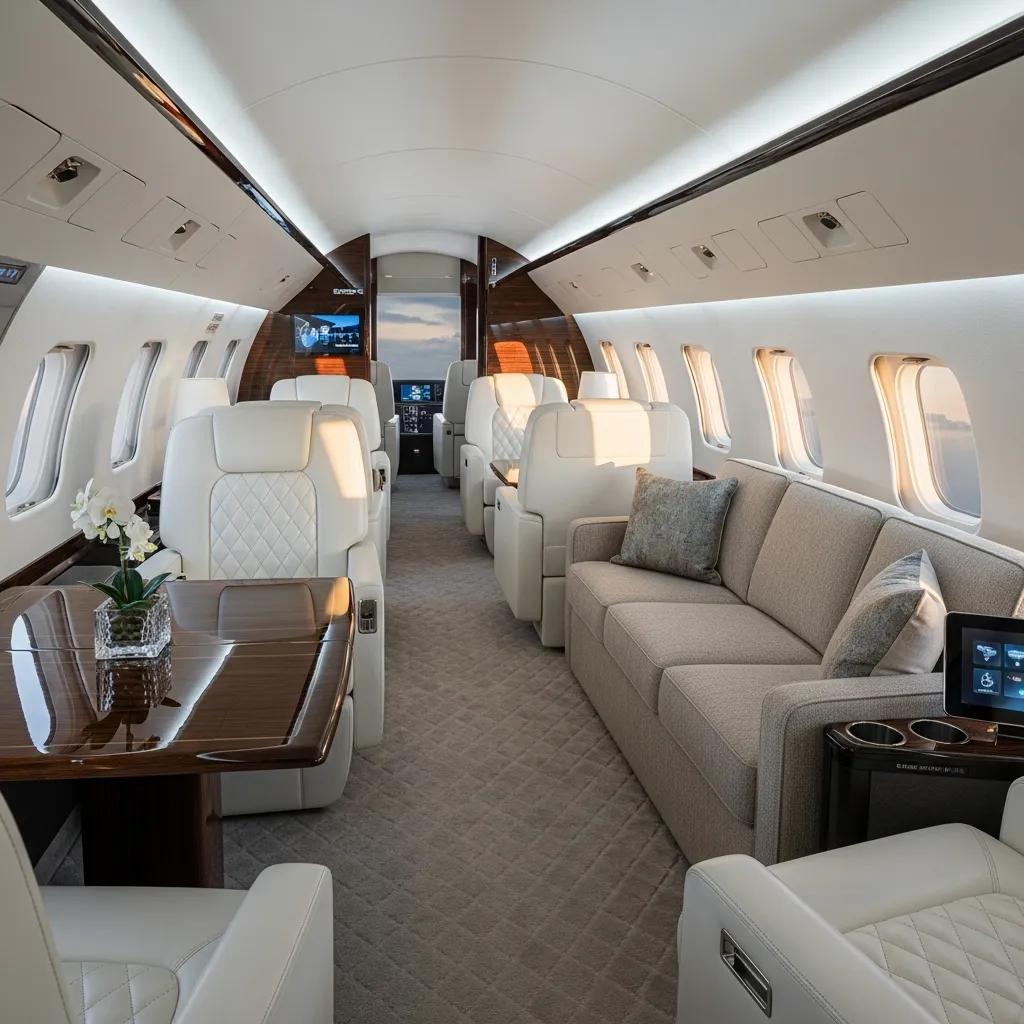
Owning a jet starts with choosing the right model, arranging purchase or financing, registering the aircraft and putting maintenance and crew arrangements in place. After purchase, you face ongoing fixed costs—hangarage, insurance, pilot and cabin salaries, and management fees. The main benefits are guaranteed access, full customisation (interiors, branding, mission equipment) and predictable availability for high‑usage flyers or organisations with steady travel needs. The trade‑off is the continuous financial and administrative burden; we break those costs down in the sections that follow.
Those ownership responsibilities lead us to the next question: how does owning stack up against charter in pure cost terms?
How do the costs of owning a private jet compare with chartering one?
Ownership concentrates capital and recurring fixed costs on your balance sheet; charter converts nearly everything into variable, pay‑as‑you‑fly expenses. Owners must allow for the purchase price, financing, depreciation, annual fixed costs (crew, insurance, hangar, management), and variable hourly operating costs (fuel, maintenance reserves, landing and handling). Charter hourly rates typically bundle crew, maintenance and insurance into a single, per‑flight price, though extras can apply. The core question—“is it cheaper to charter or own?”—depends on annual hours flown. Industry practice shows that ownership usually becomes economical only at much higher utilisation. Below we unpack initial and fixed ownership costs, variable hourly costs and typical charter rate components, with a comparative table showing representative GBP ranges.
What are the initial and fixed costs of private jet ownership?
The initial outlay is the purchase price plus any immediate taxes or registration fees, with light jets at the lower end and large‑cabin, long‑range types at the top. Annual fixed costs include crew wages or contract fees, insurance, long‑term maintenance programme commitments, management company fees and hangarage—expenses you pay whether you fly or not. These standing costs determine break‑even thresholds and explain why low‑use owners often favour charter. Understanding fixed cost structure clarifies why ownership typically needs steady, high utilisation to spread capital and fixed charges effectively.
Intro to the table: the table below lays out ownership versus charter cost components with representative GBP ranges so you can see how fixed and variable costs add up.
This shows ownership concentrates cost in purchase and fixed annual obligations, while charter converts comparable services into hourly pricing. Next we show how variable costs and depreciation change the ownership equation.
How do variable operating costs and depreciation affect ownership versus charter?
Owned aircraft incur variable costs—fuel, engine and airframe reserves, line and heavy maintenance, landing and handling fees, and cabin consumables—that scale with flight hours and route profile. Depreciation lowers the owner’s capital value and should be factored into per‑hour calculations. Charter hourly rates absorb variable costs plus a contribution toward overhead and capital in one price, which simplifies budgeting for occasional flyers. The table below itemises common variable elements and typical GBP hourly impacts under ownership to make the trade‑off clear.
Intro to the table: the table below lists common variable operating costs and how they commonly appear as hourly or per‑event values for owners.
What are typical hourly rates and extra fees to watch for when chartering?
Charter rates differ by aircraft class: light jets are cheapest per hour, midsize sit in the middle and large‑cabin/long‑range types command premium rates because of fuel burn and crew requirements. Reliable operators break out base hourly rates and clearly show repositioning (deadhead) charges, overnight crew costs, landing and handling fees, and any special handling surcharges. Before you book, confirm the common items below to avoid surprises.
- Base hourly rate by aircraft class (light, midsize, large).
- Repositioning or deadhead fees when the aircraft must move empty to serve your flight.
- Overnight crew and accommodation charges when required.
- Handling, landing and airport fees that vary by airport.
How do flexibility and control differ between chartering and owning a private jet?
Non‑financial factors often decide the choice: charter offers flexible aircraft selection and route planning without long commitments, while ownership gives absolute scheduling control and a permanently available platform. Charter availability depends on fleet size, peak demand and lead times, but large operator fleets reduce wait times and allow mission‑specific aircraft selection. Ownership guarantees availability and enables deep customisation—interiors, branding and specialised equipment—but availability can be affected by maintenance and crew rostering.
What level of availability and scheduling freedom does chartering offer?
Availability depends on the operator’s fleet, market demand and booking lead time. Operators with substantial fleets can usually source an appropriate aircraft within hours to a day for common city pairs. Peak periods require earlier bookings and empty legs can sometimes lower cost if your schedule fits. Providers that combine on‑demand charter, empty‑leg offers and jet‑card options improve practical availability. 24/7 flight coordinators and diverse fleets shorten lead times and simplify last‑minute planning—important for executives and urgent cargo missions.
How does ownership deliver customisation and guaranteed access?
An owned aircraft is registered to you and prioritised for your missions, removing the uncertainty of sourcing an external jet during busy periods. Ownership allows interior customisation, bespoke cabin layouts and mission‑specific equipment because you control the asset. The trade‑offs: mandatory maintenance checks and crew rest rules can temporarily reduce availability during heavy maintenance events. For organisations needing immediate readiness or branded executive transport, the benefits of guaranteed access and tailored fit often justify the added responsibilities.
These points lead into the next section on operational burdens versus the managed experience of charter operators.
What are the management responsibilities and operational burdens of ownership compared with charter?
Owning a plane brings substantial management duties: funding and scheduling maintenance programmes, recruiting and managing crew, ensuring regulatory compliance, handling insurance and arranging hangarage and base operations. These tasks demand time and aviation know‑how or the use of third‑party management companies. Chartering transfers those responsibilities to the operator, who provides certified crews, maintenance oversight, AOC‑level regulatory compliance and insurance, delivering a turn‑key service. The subsections below quantify maintenance, crew and regulatory duties for owners and explain how chartering simplifies travel.
What maintenance, crew and regulatory duties come with ownership?
Owners must set up an approved maintenance programme, build relationships with MRO providers, track service bulletins and comply with airworthiness directives—budgeting for both line and heavy maintenance events. Crew duties include hiring type‑rated pilots and cabin staff, maintaining training and rostering systems, and managing payroll and medical/licensing compliance. Regulatory obligations cover registration, continuing airworthiness records and oversight to satisfy national authorities. The table below maps responsibilities to typical annual time and cost impacts so prospective owners can see where effort and budget go.
Intro to the table: the table maps ownership responsibilities to typical annual time or cost impacts so prospective owners can see where management effort and budget are consumed.
These figures underline the financial and administrative weight of ownership and highlight why many users choose charter instead.
The Economics of Private Business Jet Travel: Novel Ownership Models
This study looks at the different ways companies access private aviation and how emerging models reduce costs for business travellers. It argues the traditional choices are more nuanced than commonly assumed and highlights new ownership and non‑ownership structures that expand options for corporate users.
The Economics of Private Business Jet Travel: New Ownership Models Expand Available Choices, 2008
How does chartering deliver a hassle‑free travel experience?
Charter operators handle crew sourcing and training, aircraft maintenance and regulatory compliance under their AOC, giving clients a managed service so they can focus on the trip rather than operations. Typical conveniences include 24/7 flight coordinators, VIP terminal access and fast‑track arrival procedures, plus fleet variety to fit mission needs. For urgent cargo or ad‑hoc passenger missions, charter is a reliable, turn‑key option that covers last‑mile logistics and paperwork. That managed model is why organisations with variable flying patterns or occasional urgent needs prefer charter over ownership.
When does private jet ownership make more sense than chartering?
Ownership starts to make sense when your total annual cost of ownership (amortised purchase, fixed costs, variable costs and depreciation) divided by hours flown is lower than comparable charter rates and when guaranteed access or customisation delivers clear business value. Rough industry thresholds are: under 50 hours/year—charter is usually best; 50–150 hours—fractional or jet‑card options make sense; 150–200+ hours/year—full ownership can be economical for some aircraft types. Mission predictability, branding needs and capital liquidity all affect the decision. The sections below unpack breakeven hours and user profiles so you can map your situation to a recommendation.
How many flight hours per year justify owning a private jet?
Breakeven compares the effective hourly ownership cost (annual fixed costs + variable costs + depreciation divided by hours flown) with charter rates for similar aircraft. Typical guidance is: under 50 hours/year—charter is often cheaper; 50–150 hours—consider fractional or jet cards; above 150–200 hours—ownership may be cost‑effective, especially for light/midsize jets with lower acquisition and operating costs. Factors like empty‑leg opportunities, tax treatment, route mix and maintenance schedule can shift these thresholds, so model your own numbers. The table below gives illustrative recommendations by usage band to help you visualise where you sit.
Intro to the table: the table maps usage bands to recommended solutions with rationale so you can quickly assess where your operation fits.
These are illustrative thresholds—routes, tax structure and financing can change the outcome. Fractional ownership remains a popular middle path, giving some ownership benefits without the full capital outlay.
Fractional Ownership versus Full Ownership and Charter: A Comparative Analysis
This review finds a spectrum of utility for fractional ownership between traditional charter and full ownership, reducing initial cost and easing access for frequent but not full‑time flyers. The analysis reports annual usage ranges where fractional models are most attractive.
The evolution of fractional ownership: a literature review, 2001
Who benefits most from chartering, fractional shares or owning?
Your best choice depends on flight frequency, mission criticality and how much operational control you want. Infrequent or unpredictable flyers favour charter for flexibility and no capital tie‑up; mid‑frequency users often prefer jet cards or fractional ownership for predictability without full ownership; high‑frequency, mission‑critical users or firms needing guaranteed readiness tend toward ownership. Examples below show common matches.
- A CEO flying 30–60 hours a year who values flexibility: charter or a jet card.
- A sales team flying 80–140 hours across irregular routes: fractional share or jet card.
- A multinational with 200+ hours and daily executive movement: consider ownership for guaranteed access and customisation.
For many organisations the ideal solution is charter or a hybrid approach that limits capital exposure while preserving operational capability.
If maximising productivity and minimising travel time is the core objective, business aviation—whether charter, fractional or owned—can deliver measurable value when matched to your needs.
Business Jets: Optimising Travel Time and Productivity
From global executives to SMEs and specialist teams needing rapid response, business aviation saves time and supports critical productivity. Direct flights to convenient airports, often at short notice, make private aviation a practical tool when time is the priority.
Plane gain: does a corporate jet pay off?: a model for simple evaluation of rentability of a business jet in an individual corporate setup using recent average industry …, 2022
Charter‑A Ltd offers a practical alternative for those who want access without ownership duties: a simple three‑step booking flow, 24/7 flight coordinators, a large global fleet (≈4,500 jets), transparent pricing, VIP terminal access, fast arrival procedures and the option to travel with pets. If you want a tailored quote for private jet, helicopter or air cargo charter, contact a flight coordinator through the link above for clear estimates and booking support.
The company’s operational features—3‑step booking, round‑the‑clock coordinators, VIP handling and verified safety credentials—show how charter can be a capital‑light, convenient solution for many travellers.
For bespoke pricing or to request a quote, reach out via the operator’s contact or quote channels to get transparent estimates and personalised booking assistance.
What financial and investment considerations should you factor into the decision?
Ownership ties up capital and exposes you to depreciation, resale risk and limited liquidity; chartering avoids that capital commitment and makes costs directly usage‑based. Depreciation, residual values and market cycles strongly influence long‑term ownership economics and should be modelled carefully. Tax rules and jurisdictional incentives may help but require specialist advice. Chartering transfers capital, regulatory and operational risk to the operator while offering predictable, usage‑based pricing.
The sections below explain how depreciation, tax treatment and asset value shape ownership economics and list the capital commitments and risks you avoid when you charter instead.
How do depreciation, tax allowances and asset value influence ownership?
Depreciation lowers an aircraft’s book value over time and must be included in total cost calculations; rates depend on aircraft age, model demand and market cycles. Owners may benefit from tax allowances or capital allowances in certain jurisdictions that improve cash‑flow timing, but rules vary and need professional advice. Resale markets fluctuate, creating liquidity risk that affects net ownership cost. Prospective buyers should model depreciation scenarios and consult tax advisors to understand after‑tax outcomes; that modelling often determines whether ownership or a capital‑light charter option is preferable.
What capital commitments and risks are avoided by chartering?
Charter frees you from a large upfront purchase, long‑term financing, residual value exposure and the need to fund major maintenance or unexpected repairs. Paying per flight or using a jet card avoids illiquidity, depreciation risk and the administrative burden of asset ownership. Charter shifts regulatory, insurance and operational risk to the operator while offering usage‑based pricing and flexibility. Key risks avoided include:
- No upfront purchase or long‑term financing obligations.
- No exposure to aircraft depreciation and resale volatility.
- No responsibility for funding heavy maintenance or unplanned repairs.
- No ongoing crew payroll, regulatory administration or insurance management.
These points explain why many businesses and private flyers choose charter unless they have consistent, high flying needs.
To support cost‑conscious travellers, Charter‑A Ltd highlights price transparency and access to a 4,500‑strong fleet, helping lower‑frequency flyers find the right aircraft at clear prices.
If you’re ready for a quote or want to discuss routes, aircraft or pricing, contact Charter‑A’s flight coordinators through the website’s quote or contact channels for tailored support.
Frequently Asked Questions
What are the tax implications of private jet ownership versus chartering?
Tax implications can vary significantly between ownership and chartering. Owners may benefit from tax deductions related to depreciation, operational costs, and interest on financing. However, these benefits depend on jurisdiction and specific tax laws. In contrast, chartering typically does not involve ownership-related tax liabilities, as costs are treated as operational expenses. It’s advisable for potential owners to consult with a tax professional to understand the implications fully and to ensure compliance with local regulations.
How does the booking process for chartering a private jet work?
The booking process for chartering a private jet is straightforward. It begins with a trip request, where you provide details such as your departure and arrival locations, travel dates, and passenger count. A flight coordinator then sources suitable aircraft and confirms availability and pricing. Once you agree to the terms, you can secure your booking with a deposit. Many operators offer online platforms for ease of booking, while others provide dedicated coordinators for personalised service.
What should I consider when evaluating charter operators?
When evaluating charter operators, consider their safety record, fleet size, and the types of aircraft available. Look for operators with a valid Air Operator Certificate (AOC) and positive reviews from previous clients. Transparency in pricing and the inclusion of all potential fees is crucial. Additionally, assess their customer service quality, including responsiveness and support during the booking process. A reputable operator should also provide clear information about crew qualifications and maintenance practices.
Are there any membership programs for private jet chartering?
Yes, many private jet charter companies offer membership programs or jet card options. These programs typically provide pre-purchased flight hours at fixed rates, often with guaranteed availability and simplified booking processes. Membership can be beneficial for frequent flyers, as it allows for predictable costs and priority access to aircraft. However, it’s essential to compare the terms of different programs, including any additional fees and the flexibility of usage, to find the best fit for your travel needs.
What are the advantages of using a broker for private jet chartering?
Using a broker for private jet chartering can offer several advantages. Brokers have access to a wide range of operators and can help you find the best aircraft for your specific needs at competitive prices. They can negotiate on your behalf, ensuring you receive the best possible deal. Additionally, brokers often provide valuable insights into safety records and operator reliability, helping you make informed decisions. Their expertise can save you time and effort in the booking process.
How can I ensure a smooth travel experience when chartering a private jet?
To ensure a smooth travel experience when chartering a private jet, communicate your needs clearly with the operator or broker. Confirm all details, including flight times, catering preferences, and any special requests, well in advance. Arrive at the airport early to allow for any unexpected delays. Familiarise yourself with the operator’s procedures, including check-in and boarding processes. Lastly, maintain open communication with your flight coordinator for any last-minute changes or needs that may arise.
What are the typical cancellation policies for private jet charters?
Cancellation policies for private jet charters can vary by operator, but most have specific terms regarding refunds and fees. Generally, cancellations made well in advance may incur lower fees, while last-minute cancellations could result in higher charges or forfeiture of deposits. It’s crucial to review the cancellation policy before booking and to understand any deadlines for changes or cancellations. Some operators may offer more flexible terms, especially for members or frequent flyers, so inquire about these options.
What are the environmental impacts of private jet travel compared to scheduled commercial flights?
Per passenger, private jets generally produce a larger carbon footprint than commercial flights because of smaller load factors and higher fuel burn. Some operators are adopting mitigation measures—sustainable aviation fuels, carbon offsetting and improved operational efficiencies—and flying direct to smaller airports can reduce ground transfer emissions. Consider your route, passenger count and offsetting options when assessing environmental impact.
How can I verify safety and compliance when chartering a private jet?
Choose operators with a valid Air Operator Certificate (AOC) and strong safety records. Ask about maintenance schedules, inspection regimes and independent safety audits. Reputable operators disclose crew qualifications and training standards; requesting these details is a sensible part of due diligence before you book.
What advantages does fractional ownership offer over full ownership?
Fractional ownership lets you buy a share of an aircraft, giving access to private flying without the full capital and responsibility of sole ownership. Costs are shared, and management services (maintenance, crew and operations) are typically included, reducing administrative burden. Fractional works well for frequent flyers who don’t need permanent access to a single aircraft.
Can I customise the interior of a chartered private jet?
Chartered aircraft usually offer fixed interior configurations; significant structural customisation isn’t feasible for a single flight. However, many operators accommodate onboard preferences—catering, seating arrangements and amenity requests—and repeat clients can often secure consistent cabin standards. For deep, permanent customisation, ownership or fractional models are the better route.
How should I choose between jet cards and ad‑hoc charter?
Compare your flying frequency, budget and need for guaranteed availability. Jet cards provide pre‑purchased hours at fixed rates and often include availability guarantees and simpler booking. They suit regular flyers. Ad‑hoc charter is more cost‑efficient for irregular or infrequent travel since you only pay for flights you take.
How do I find the best private jet charter deals?
Shop multiple operators, compare transparent pricing and ask for full cost breakdowns. Sign up for operator alerts to catch promotions and consider a reputable broker who can negotiate on your behalf and match aircraft to mission requirements.
What lead times are typical for booking a private jet charter?
Lead times vary by demand and fleet size. With a large fleet, many operators can confirm flights within 24 hours for routine city pairs. Peak periods or specific aircraft types may need earlier booking. For last‑minute travel, empty legs can offer discounted options with minimal notice—check availability with your operator.
Conclusion
Choosing between charter and ownership comes down to three things: flexibility, cost and who handles operations. Charter gives fast access to a varied fleet without ownership responsibilities—ideal for low or variable use. Ownership delivers guaranteed availability and full customisation for heavy users but brings high fixed costs and management duties. If you’d like a personalised recommendation or a quote, Charter‑A Ltd can help map your usage to the most cost‑effective option.
